Annie's Project

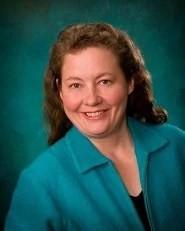

UNH Extension's Women in Ag programming and the Beginner Farmer Program collaborate with Annie's Project to empower women farmers. Kelly McAdam and Doris Mold share insights with Kendall and Rebecca on Annie's Project, which focuses on risk management and financial literacy for women in agriculture.
Show notes:
Food and Agriculture Organization of the United Nations: https://www.fao.org/home/en
International Year of the Woman Farmer: https://www.fao.org/woman-farmer-2026/en
UNH Extension Women in Agriculture Program: https://extension.unh.edu/agriculture-gardens/farmer-support-networks/women-agriculture
UNH Extension Beginner Farmer Program: https://extension.unh.edu/agriculture-gardens/farmer-support-networks/beginning-farmers
Kelly McAdam: kelly.mcadam@unh.edu
Doris Mold: doris@anniesproject.org
Annie’s Project: anniesproject.org
2022 Census of Agriculture for New Hampshire: https://www.nass.usda.gov/Publications/AgCensus/2022/Full_Report/Volume_1,_Chapter_1_State_Level/New_Hampshire/
YouTube Video – What Can the US Census of Agriculture tell us about women farmers in the USA?: https://www.nass.usda.gov/Publications/AgCensus/2022/Full_Report/Volume_1,_Chapter_1_State_Level/New_Hampshire/
New England Farm Land Finder: https://newenglandfarmlandfinder.org/
Annie’s Project Course Know Your Numbers, Know Your Options: https://anniesproject.org/know-your-numbers-know-your-options/
The Center for Farm Financial Management: Interpreting Financial Statements and Measures: https://ifsam.cffm.umn.edu/Home.aspx?c=602
FINBIN: Financial Database of Farm Data: https://finbin.umn.edu/
UVM Farm Labor Dashboard: https://www.uvm.edu/aglabor/dashboard/
UNH Cooperative Extension: https://extension.unh.edu/
Kendall Kunelius – kendall.kunelius@unh.edu
Rebecca Dube – rebecca.dube@unh.edu
Transcript:
Kendall Kunelius 00:09
Welcome to this episode of Shared Soil, a podcast dedicated to creating community, honoring challenges, and encouraging personal and professional growth for all people in agriculture. My name is Kendall Kunelius, and I'm a field specialist in the area of agricultural business management.
Rebecca Dube 00:26
And I'm Rebecca Dube, providing administrative and technology support to Extension.
Kendall Kunelius 00:31
So, Rebecca, I'm really excited about today's topic because we are kind of taking our little world here in New Hampshire, and we're blowing it up onto an international scale. This episode is all about celebrating the International Year of the Woman Farmer, so 2026.
Rebecca Dube 00:46
Yay!
Kendall Kunelius 00:47
Yeah, yay! I'm super excited. So I'm gonna read to you, and for the listeners to just help us understand the context behind who is in charge of making this year happen, and the celebrations and the information that comes with that. So this little chunk, this little nugget, is written on the web page for the Food and Agriculture Organizations of the United Nations, and we will put the website in the show notes for those interested. So the International Year of the Woman Farmer aims to raise awareness of the role of women in agri-food systems and the challenges they face, including land tenure, financial and technical constraints, and limited access to services and education. It also seeks to encourage policies and investments that empower women in agri-food systems and promote greater synergies among international initiatives supporting women farmers.
Rebecca Dube 01:36
And UNH Extension Women in Ag programming has joined forces with the Beginner Farmer Program to increase the reach and access to education. We are also proudly connected to a national women in agriculture organization called Annie's Project. So to help us celebrate this year of the Woman Farmer, we have Kelly McAdam from UNH Extension and Doris Mold, CEO of Annie's Project. Now, Kelly, we have had you on the podcast before, and we've learned a bit about you from our very first episode. So why don't you give us a quick overview of your role, and then Doris, you can tell us about your work with Annie's project.
Kelly McAdam 02:15
Great, thank you, Rebecca. So I work for the University for Cooperative Extension here in New Hampshire, and I am the program team leader for the Food and Agriculture program team. And I've had this role for about three years. Prior to that, I was an agriculture business management field specialist, and my focus areas were programming for women in agriculture and also for new farmers. So through the women in agriculture programming, my focus was bringing Annie's project to New Hampshire. So probably the first couple of years in my career with Extension, I was introduced to Annie's project through colleagues, and you know, as a team, we we brought some Annie's project programs to New Hampshire. And I really loved the program, and just saw how empowering it was to the women that participated, and was just really fortunate enough to to kind of take the lead on continuing that programming here in New Hampshire. And I've been involved ever since. Even though I'm no longer in the educator role, I am on the board of directors for Annie's Project and have been involved really on the national level since I've been more in this administrative role at UNH Extension.
Rebecca Dube 03:32
Wow, terrific! So, Doris, can you tell us about Annie's Project?
Doris Mold 03:36
Sure. I'm Doris Mold, and I am CEO of Annie's project. And Annie's project is really programming centered around women in production agriculture: so farmers, ranchers, growers, but also women landowners and women agriculturalists. Now that being said, we welcome anybody to attend our programming, and we do have people from all different walks of agriculture and identities join us for the programming that we do. But our vision for Annie's project is that women are change agents who strengthen their businesses, families, and communities. And our mission is to empower women in agriculture to be successful through education networks and resources. And Annie's project was started in 2003 by Ruth Hambleton. She is currently still serving on our board of directors as our treasurer, and she is our founder. But she was inspired to start Annie's project for several reasons. First of all, her mother was a, as she puts it, a town gal, and she married a farmer, and they farmed together for several years. And then they made the decision that one of them was going to have to take an off-the-farm job to keep things. And I think that resonates with a lot of people. And in this case, they decided that Ruth's dad would take the off-farm job, and her mother stayed home to farm, so she took over the day-to-day management and most of the work that was happening. And her dad worked out. And Ruth saw at early age this example of how women were kind of dismissed in their agricultural dealings when they're in production agriculture. That women weren't always taken seriously. That women - and in this case, her mother hadn't grown up on a farm, so maybe lacked a little bit of confidence as to dealing with some of this. And also you know societal roles, especially for Ruth's mom's generation, would have been substantially different than what we're seeing now. And so you know she was really fulfilling an untraditional role of being the primary farmer. You know, not the only farmer. I'm sure that Ruth's dad was helping at night and on weekends, but she was fulfilling that primary role. And Ruth saw her struggles, and Ruth also saw her sitting at the kitchen table, looking, working on the books, and figuring out how to make things work. And they changed some things around. They sold their dairy herd. They got some laying hens. Ended up selling eggs into Chicago. So really, you know, she made some pretty dramatic changes with her farming operation as well. So Ruth then, at a later point in life, once she graduated from college and she started a job in Extension, she was noticing then when she hosted meetings in her role as an Extension educator, that maybe there weren't a lot of women participating. Or if they were, they're kind of sitting back and being quiet and maybe a little bit intimidated by the atmosphere. And Ruth thought, "Well, I'm going to I'm going to try something," and so she started out with 10 women in February of 2003 and had a course for them to focus on the five areas of risk management, and really looking at your production risk, your financial risk, your market risk, your human risk, and your legal risk. And the women loved it, and they thrived, and they all reported back that they had improved decision making because they were confident and knowledgeable, and then brought something back to the operation. And in some cases, brought some knowledge that their other family members, their spouse, or father-in-law or father maybe didn't have even, and so brought in some new ideas. And a lot of women reported that they felt like they finally had a seat at the table.
Kendall Kunelius 07:26
I am so thrilled that you shared that, Doris, because I think it really leads us so beautifully into this next piece that I'm going to kind of frame our conversations with before we even jump into the questions. The 2022 Census of Agriculture has this really nice fact sheet. Again, we'll put it in the show notes. But I think it actually complements what you were just saying because it gives us that data that Ruth was maybe noticing she was looking at, and it it kind of gives us an insight into what we are seeing on a national scale. So I'm going to read just a little piece here that just gives us the facts, and then we'll use those to kind of frame our questioning going forward. So in 2022, the United States has 1.2 million female producers, accounting for 36% of the country's 3.4 million producers. Female producers were slightly younger, more likely to be a beginner farmer, and more likely to live on the farm that they operate than male producers. That's going to be a key a key for one of our questions. So hold on to that little piece. So more than half of all farms, 58%, had a female producer. And farms with one or more female producers accounted for 41% of the U.S. agricultural sales and 46% of the U.S. farmland. So that that was a lot to throw at you, and we'll kind of break it down a little bit. But the two pieces in there that I really want to make sure we pull out immediately is to say, 36% of the 3.4 million producers, there's a lot of female farmers. That's a lot of people, and to say that we're also, you know, women are more likely to be beginner farmers. Kelly, that really makes me think of you starting that beginner farmer program, the new farmer school here in New Hampshire. And I just think that there's really great response, kind of like a feedback loop there. I don't know if you want to say anything about that real quick before we move into questions.
Kelly McAdam 09:36
Yeah, we started a new farmer school in 2019 and probably had about 20 - 25 participants in that class, and really that's meant for just giving people who want to start a farm or maybe who are early in their farming career just kind of a broad overview of what it takes to farm as a business in New Hampshire. And what I really like about that course is it connects people to agriculture service providers. It gets them thinking about you know what are their goals and like how much money do they need to bring in from the farm. And a lot of times there are instances where our participants decide, "I am farming the completely different thing than I thought I was gonna be farming," or "I'm not gonna farm at all because I don't want to put all this money into this activity, into this endeavor, and to like I just can't maintain it given my life, my life goals." So yes, we've had a lot of good participation. We do get a lot of women that participate in the farmer school, and you know, partners, whether that's spouses or it's two individuals who are wanting to farm together.
Doris Mold 10:53
Well, I mean, first of all, kudos, Kelly, for getting a beginning farmer school together because that's so critical-is developing that next generation of farmers, and that ties right back into the census too. You know, we're seeing increasing age of farmers and how it's so important to bring new people in, and and sometimes those people are not going to. They might have skipped a few generations of being involved in production agriculture, but Kendall, I wanted to give you a little bit of insight because I on the census.
Kendall Kunelius 11:23
Yeah, please do!
Doris Mold 11:24
because I served on the National Ag Statistics Advisory Committee for six years and chaired it for three years, and that gave me some unique insights into the census. And several of us were seeing one time that we knew that there were more women. Anecdotally, we knew that there were more women that were farming, but they weren't claiming that space. And I and several other people from the grassroots were challenging National Ag Statistics Service when we say we know there are more women, but for a long time there was not even a question about Are you male or female? It was just assumed that the farmers were guys, right? That was first of all.
Kendall Kunelius 12:07
Interesting.
Doris Mold 12:07
So there was a long time that it was just - society assumed that men were the farmers and that I don't know women were the farm wife, helpful handmaiden, whatever you want to call her. And then they started asking questions about - people could identify themselves and they could identify additional operators, you know, because they they were also always looking for the primary, you know, the who's the primary operator of the farm. That was to help identify some information that Congress needed on farm finances. But I won't get into all that stuff. But the interesting thing was is that we went to the processing center for the census, and we saw actual census forms being scanned in to put all the data together. And a lot of those census forms were signed by women. And we said, you know, if women are signing those census forms, they know a lot about the operation. But in a lot of those cases, that census form also showed that she was not counting herself as a farmer. And so, in 2017, the census questions were changed, and I served on the expert panel that helped come up with the new questions for the census. And so, there was a group of I think it was a dozen of us that came together because USDA was taking it seriously. They said, "Hey, we need to take a look at this, and we need to look at women and new and beginning farmers." And so we adjusted the questions. We came up with questions. NASS tested the questions. It was really interesting to hear some of the results because they test everything very thoroughly before it goes out for the general census. But they went out and they interviewed some people, and some of the comments that were coming back kind of astounded me in some ways. But I knew they were there. There was one comment from one family that said, "Oh yeah, she tries to put herself on the census form, but we keep pushing her down because you know we don't think she's that important, you know, and that she doesn't need to be included." And others were "yes, she needs to be part of this, and she's one of the key people in the operation, and she needs to be on there." And there was a another person, another woman, and this was her belief. Even though she was actively involved in the farming operation, she said "the Bible says that my husband's in charge, and that's what I'm putting down." And then I've talked to other women too who said, "Yes, I do all of these things on the farm, and I work part time off the farm, but I don't want to take credit away from anybody." And I said, you're not taking credit away from anybody by putting yourself on. You're just claiming your piece. Everybody else can have their credit too. So there's still some attitudes and some beliefs, and people are entitled to whatever their belief system is. But I think that number for both new and beginning farmers and women farmers is underreported still.
Rebecca Dube 15:04
Sure.
Kendall Kunelius 15:05
And I'm going to add a little bit to that too, and refer back to our young farmers in New Hampshire episode. I'm thinking about Rebecca, where we we were talking to two young women who are farmers in New Hampshire, but they are not beginner farmers. Both of them grew up on a farm and effectively have been riding on the seat of a tractor at two years old. You know, like they literally grew up generationally farming. Kelly, you also grew up on a farm, right? A dairy farm. So, so you kind of understand that.
Kelly McAdam 15:34
Yeah, like the day I came home from the hospital, I was in the barn. There's a picture of me in the stroller with the cows. Yep.
Kendall Kunelius 15:41
Yeah.
Speaker 1 15:43
That's basically the scoop here too. I grew up on a farm. I farm now. Women have always been there, and we will always be there. It's just that the right questions haven't been asked in the past. Not until the 2017 census, and then 2022, they added, they neglected the marketing question that we put out there for the 2017 census. They added it on in the 2022 census, but we've always been there, and it's just the matter of whether it's deeply ingrained ideas from our own family or society in general again has not recognized the role of women farmers. And women are successful and can add to the farming operation. The whole farming operation does better, and the community is a better place. And it's not about recognizing women or uplifting women because they're women; it helps everybody. And we want farms and agriculture in the United States to be successful. And so that's really what all this is about. And if you don't know who's involved, how do you make decisions about programming and funding, and what's important?
Rebecca Dube 17:05
Yeah, right. Well, Doris, you mentioned the funding. One of the biggest challenges that all farmers in New Hampshire and New England face is land access, and this isn't just beginner farmers. It's also young farmers, established farms, generational farms. Historically speaking, women weren't always able to inherit farm properties that apply for loans or credit cards or even a mortgage. We were watching the webinar on your Annie's project page called "What Can the U.S. Census of Agriculture Tell Us About Women Farmers in the U.S.A." And I think we were talking about that a little bit just now. The speaker addressed this phenomenon directly, so we'd love to hear your thoughts about how land access is a challenge for our women farmers today, and what observations you can share on that.
Kendall Kunelius 17:54
And then Kelly, I'd love to get your thoughts on this after Doris too.
Doris Mold 17:58
Well, I think that's a huge issue all the way around. And as you rightly pointed out, it's not just a women issue. It's definitely an issue for new and beginning farmers. But I'd say too, it's an issue for smaller or mid-sized farmers, probably in New Hampshire. It is for farmers across the United States. Land access is highly competitive, and sometimes again because maybe women have not been recognized as farmers, that landlords might not recognize their abilities, or that women even might be interested. And when you've leased out land, you've got people who maybe have deeper pockets, who have been farming longer, have a stronger financial base. They're able to access land more easily than than people who maybe are less financially secure or maybe don't have as much experience. And you know, it's really going to depend from landlord to landlord. Can you convince those landlords that you're going to be good stewards of their land? I mean, it's not just about the money aspect, right? For a lot of landowners, they want to make sure that they have good stewards of their land, or at least I would hope they they would, right? And that convincing people that you have the experience and the expertise or the willingness to learn and access resources, so you can be the best steward of their land as possible. So that is a really challenging area. I think that there have been limited studies that have shown that women are very good stewards of the land and are really forward thinking and thinking about the future. I don't know, I haven't been a landlord myself, but I think you have to kind of take a balanced approach. You don't want to overwhelm anybody with data or research reports or whatever. I think a big part of it is developing relationships, right, with people and helping them understand kind of what your vision is and why having access to your land is important. I think there's some other opportunities that are presenting themselves as well, and we're seeing this. Actually, I was just last week on a solar array, you know we're seeing more solar energy arrays being put up, and there are some farmers now that are able to access land on the solar arrays that they wouldn't have been able to access otherwise. So I saw in this case sheep being grazed, but there are also plans for specialty crops and vegetables and flowers and some fruits and all of those kinds of crops. A lot of that is being led by women, so there may be some opportunities to access some land in some more unusual ways as well. So I think we have to keep our our eyes and our minds open to those opportunities, I know that there's some controversy around that. People don't like seeing solar arrays, but in the cases where they are present, that might afford some people some opportunities that might not otherwise be available to them.
Rebecca Dube 21:14
Kelly, do you have something to add to that?
Kelly McAdam 21:17
Yeah, I'll just touch on you know here in New Hampshire, what the landscape is. You know, we have a lot of forest land, and when we have a lot of acreage and farms in agriculture land, it's typically a dairy farm that is no longer operating, and there's hundreds of acres. And there's a couple of points to make here. One is it's just really challenging for beginner farmers, men or women, just to make the connection to the landowner, and we hear that a lot. You know, where do I find those people, those landowners that have the property that I could farm? And that's really a challenge. And just going back to my point about our dairies that are no longer in operation. The property is so big that it's not necessarily set up for a fruit and vegetable operation or just an annual crop operation. And that's not to say it's not good land and the arrangement can't be made. But there's typically our farmers, our beginner farmers are looking to do some direct to consumer sales, and they have off farm income. And the other big piece to this is housing. They don't have housing on or near the property, so there's a lot of challenges that play there, and it can work out and the arrangement can be made, but again, what we hear a lot is just our farmers not being able to find the land. You know, like there's some type of matchmaking tool which does exist. We just don't see a lot of New Hampshire properties listed, and I'm talking about New England Farm Land Finder. It's a website of land for good hosts, and it's great. There's a lot of properties on there from other New England states, not a lot from New Hampshire.
Doris Mold 23:10
You know, so it's interesting, Kelly, that you bring up the old dairy farms, and I think we've we've seen that across the country. What I've seen in some instances: we have some organizations in the Midwest, which is where I'm from, and that there are a few of them that have rented or purchased an entire smaller dairy farm, and then they have members of their cooperative or organization that farm it, and they're doing all specialty crops. So they each have their piece of land within this larger farm, and it's kind of an interesting model to offer land. They get leased their portion of land. There's water access and things like that. Now the one thing is, is then they're all driving to that farm, right? They're not living on the farm, so it lends itself to growing fruits and vegetables, for instance, and flowers. But livestock is a little bit different situation. I mean that that's one potential model. If there's somebody out there that wants to kind of organize that and coordinate that, and I don't know if that happens in New England. I'm not familiar with any situations that I'm aware of.
Kelly McAdam 24:21
Yeah, I love that idea, and it happens. I think a little bit more, probably in Vermont. I know I'm thinking of one kind of incubator farm that's done really great with that type of model. But yeah, it doesn't. We don't see it a lot here in New Hampshire.
Kendall Kunelius 24:36
I also think we tend to - thinking what you were just saying, Doris, about specialty crops. We have such a variety of crops here in New Hampshire. We know that the diversified farm model has proven out. If you can hone in specific enterprises, it tends to be more more successful than monocropping. Which I feel like, you know, the Midwest - you have that open land. Here we have to be a little bit more creative about the the products that we can grow and produce. So I'm thinking about our Christmas Trees in July episode with Krista from Krista's Christmas Tree Farm, and how she lives up north. Her land was limited, so Christmas trees was a really good opportunity for her to use the land that she had that maybe wouldn't have lent itself to other production methodologies. Thinking about hay as a crop as well, right? But all these different things we think about in a more creative sense. And I'm kind of going back to what you're saying about the the vision and the mission of Annie's. Could you just read the first sentence of that again about the vision?
Doris Mold 25:38
The vision. Okay.
Kendall Kunelius 25:39
The vision.
Doris Mold 25:40
Okay. Women in agriculture are change agents who strengthen their businesses, families, and communities. And I think, as you were saying, that plays right into that thinking outside of the box and thinking about different things. And while it's true that there is a lot of monoculture in the Midwest, a lot of corn and soybeans, I am seeing new and beginning farmers, women farmers; there's a lot of specialty stuff that goes on too, and so we're seeing, for instance, I'm thinking of woodlands. I'm thinking of silver silvo pasturing, you know, and including livestock. We have farmers that are pasturing poultry in woodlands. We have people that are growing mushrooms. I took a mushroom growing class because we were thinking about possibly doing that on some of our own property because we have woodlands and things. And some of these things would lend themselves very well to what's available. And I just look at some of the - I'm not as familiar - I'm a little more familiar with Vermont and Maine. Strangely enough, I should be familiar with New Hampshire growing. But you know, some of those things I think would lend themselves to the environment that you have in the- And you have an advantage too in where you are because you are so much closer to very large population centers. And so that lends itself really well to providing high quality specialty items as well. Because Midwesterners, you know, we have some large population centers, but we're pretty spread out, and so we're not close to New York and Boston and places that really might have some opportunities for some really good value-added.
Rebecca Dube 27:24
All right. Well, you know, speaking of that, New Hampshire is actually one of the top states with a percentage of female farmers. It's actually 45% of the total farmers in New Hampshire are women producers.
Kendall Kunelius 27:39
Yeah, and it's quite a few. And I feel like as Extension, we're very lucky to support those women farmers. You know, all farmers, of course, but it's pretty cool to live in a state that has such a high percentage of female producers. And Doris, I wanted to go back to what you were saying about being a change agent, right? And we're supporting businesses, supporting communities; and that makes me think, Rebecca, about our episode about the farm trail and using community services as a marketing channel for farmers. And it goes right to what you were saying, Doris, with like population centers. We really have such a stark contrast here in New Hampshire between those Nashua, Manchester, Concord areas, and then we've got the North Country, where you can just travel for miles and see nothing but woods. So I think the other piece of the puzzle about being a change agent and being someone who supports local businesses and communities is being creative with how those products are getting to your consumers. And I think that's also a really interesting piece of the puzzle that our women farmers seem to be really jumping on board with, and the interest is there. That episode is with Kate Savage, if there's any any listeners who are interested in going back and referring to what I'm talking about in that episode. So I'm gonna take us into kind of a little bit more of a heady topic. But Kelly, I'm interested to get your input on this question in particular. So we were just talking about that 2022 Ag census. Women and female producers were more involved in day-to-day record keeping and financial management decisions. We know that financial decisions can make or break farm viability. So what are some of your top resources for women farmers who are looking to learn more about agricultural business management and decision making?
Kelly McAdam 29:23
Yeah, it's a good question. You know, just getting connected to your local Extension is really like the number one piece of advice I can give because you know there's many different -You know, when you talk about business management and record keeping, there's a lot of good templates out there. Certainly, there's assistance with learning QuickBooks for farm businesses. There's a lot of great curriculum through Annie's project. Both, you know, if you don't have a state program at the national level as well. So, like I'm thinking of Know Your Numbers, Know Your. Options is a really great curriculum. And just getting to know what your costs of production are-it's something that we've always taught in business management in our state with Annie's project. And you know, a lot of times it's the realization that maybe you're not charging enough, charging your customers enough. So price-making pricing decisions, and really that kind of falls into making a lot of different management decisions once you have those numbers. So, while I don't have a specific tool, I think there's a lot of there's a lot of great resources out there, and certainly, Annie's project, and if you're in a different state, just connecting with your local Extension to see what they can support you with.
Doris Mold 30:47
Well, if I can interject some things. You know, Kelly, I think Kelly was being maybe a little too modest on some things, but knowing your cost of production is key. And so many people don't really understand what it costs them to produce. They haven't taken the time. They just, for a lot of people, just go out and produce it because hey, "I wanted to do it," or whatever. But understanding what it costs you to produce and understanding that your time is valuable too, and putting a price on that. So that's really important. I would like to point some people to a resource that I use. I think, first of all, Extension is a huge resource. There's so many good things that out of Extension that we've seen. There is the risk management library, which is another great place to go, and also they have lots of resources from across the country and some really good things there. But also, the Center for Farm Financial Management is out of the University of Minnesota and its Extension, but they produce things for all over the country. So you don't need to be about shy about looking at what they have available. But if you're really interested in understanding more about financial statements, what the financial statement measures mean, they have an actual online course that's free. That's Interpreting Financial Statements and Measures. It's a really nice course in that it gets little short excerpts, so you're not sitting there and listening to something for an hour. It might spend five minutes on explaining this particular topic, and maybe eight minutes doing another thing. And it's really a great place to go. And it would be applicable anywhere across the United States. So that Developing and Interpreting Your Financial Statements and Measures - really an excellent free resource. And there's also another free resource. It's expanding, but they also have a whole database of farm data, and it lists the farms. And a lot of it is more midwestern-based, but it's a place to start. It's called Finbin, and it's a database that has a lot of financial information, so you can go look to see what somebody else's cost of production is, and maybe get a handle on, okay, what's kind of the range on some of them.
Kendall Kunelius 33:18
Benchmark.
Doris Mold 33:19
you know, and really use it for benchmarking. And it is the largest publicly available farm database in the world, probably. And that's - you know, the really big operators have their own little peer groups, and they do all kinds of stuff, and they get together. But smaller and middle-sized farms don't have access to that information, so that's another really good piece, and it's all free. It's there waiting for you to explore.
Kendall Kunelius 33:48
I'm going to be kind of facetious and answer my own question here too, and I'm going to say the other place I really like to point farmers is the UVM's Farm Labor Dashboard. So Kelly, I think you hit the nail on the head - cost of production and including labor. Because I think a lot of farmers, like you were saying, we undercharge. You know, knowing that cost of production plus your labor makes the biggest difference. So the farm labor dashboard has how much does it actually cost to hire someone tool so you can actually put the taxes, the salary, everything else, like a complete picture about what that employee might actually cost you, and that's really great. They also have a great tool on there that cost-compares two different production methods based on equipment that you either want to purchase or already have. It's a great decision-making tool about taking on debt, understanding debt that actually returns your investment versus just debt that it isn't the right tool for the job. I have sat with farmers and we've filled that out. It gives you a beautiful report at the end, and it's really, really interesting to just talk through that process for folks to help understand what what we mean by the term farm viability. That it's genuinely a. Holistic term, and you can't take production away from finances, and you can't take the numbers out of the production methodologies. They they genuinely go hand in hand.
Doris Mold 35:09
Kendall, could you repeat that last resource that you just mentioned? Your favorite tractor resource?
Kendall Kunelius 35:15
Yeah, yep. That's a tool that's posted on the UVM Farm Labor dashboard. It's like an Equipment Cost Recovery Tool, as I believe what it's called, and it was actually developed by John Hendrickson out of the Midwest. Yep, Kelly, I saw you. You were gonna say something.
Kelly McAdam 35:31
Yeah, I just wanted to circle back to that point about labor, where that's a big piece. Like as the farmer, owner, operator, you know, you're not writing yourself a check necessarily, but you really have to, like the farmer needs to figure out how much value of their labor is going into the production. Because that all connects to the cost of production. So it's just so important to make sure that they're factoring that in so they are charging prices that truly cover all of those different aspects of production.
Rebecca Dube 36:06
Yeah, agreed. Now, Kelly, Doris, and Kendall, you all work extensively with women farmers. Can you tell us some stories about women farmers who really stood out to you? What made their stories unique or memorable?
Doris Mold 36:21
Well, you know, if we wanted to go through maybe the next 100 episodes of your podcast, we have lots of stories to share. Oh my, we literally have thousands of stories, rright? Every woman has her own story. Every participant has their own story. It was interesting. So we'll relate this back to the International Year of the Woman Farmer. I was at a conference in Washington D.C. and it was specifically to celebrate the Year of the Woman Farmer. And they had a reception that started, kicked off the event, and we had some of the sponsors. Annie's project was one of them. We had a table, and a woman came up to us and was super excited. And she said, "My husband and his brother were farming, and his brother was getting to the point where he was not able to farm anymore. And so my husband asked me to come back to work on the farm full time. I had been working off the farm in town." And she said that she took Annie's Project 101, the the first course which covers all five areas of risk management, and she was just going on and on how what a great resource that was. But two key things that she kept kept really reiterating to me that really made a difference. She said, "Well, I I got home and I found out," she said. "We didn't have any kind of contracts for anything. Everything was a handshake." And she said, "I told my husband that if I'm going to work here, you know, that I learned in Annie's project, you need to have contracts, and I learned how to read contracts properly and write contracts properly." And she said everything was done just on a handshake, and she said "that exposed us to so much risk. So when I got back to the farm, I reviewed everything. We got contracts on everything, and my husband," she said, "begrudgingly agreed that this should have been a contract," because it had exposed them to a lot of risks. The other area that she really honed in on was their insurance and how they were super underinsured. She examined everything and she went out and purchased proper insurance and got that all straightened out. And she said those were two areas in particular. Now she had always done the books and things like that, but you know I think she had just been taking the receipts and stuff and kind of looking at that and generally taking care of that and knew where the farm was financially, but hadn't really understood those two key elements until she was actively involved in the production side of things. and so she was really excited and talked to us for the longest time how that made such a big difference in their operation. Another story that I'll share, and then I'll turn it over to Kelly because I'm sure she has a lot more too. But we've had multiple women that unfortunately lost their farming partner, their spouse, or sometimes their parent that they were farming with. In the one case I'll mention, this woman had lost her husband, and she had taken Annie's project ahead of, you know, she had been farming with her husband. And she took Annie's project ahead of her her husband dying, and he died suddenly. So it wasn't kind of like she planned on taking Annie's project and then was going to take over. But he passed away suddenly, and pretty much everybody told her that you can't farm on your own, that you aren't going to be able to do this because you know your husband was the rock and and in charge and everything. And they had very young sons. I think probably tweens, maybe early teenagers, and at least two of them wanted to farm. That's what they had expressed, and she decided that she was going to continue to farm anyway. She had wanted to farm too, continue the farm. And her banker, their banker, their accountant, all of them said, "No, I think you should just sell up." But she had gone through Annie's, and she went out, and she was confident of her ability. She went out and found a new banker who believed in her. She found a new accountant. She found a new insurance agent, and she continued to farm, and she continued to farm successfully. And now she has transitioned the farm to her sons, who are now farming. Now that wouldn't have happened had she said - That wouldn't have happened had she not taken Annie's, grown the confidence, grown the knowledge. She really was one of those women that we helped empower, and she had the confidence to say to the naysayers, "I'm going to find somebody else. You're providing me with the service, but I'm going to find somebody that believes in me and knows that I can continue this farm."
Rebecca Dube 41:16
Awesome!
Kelly McAdam 41:17
I'll share a couple of anecdotes from our women's programming. So something that I've found really fascinating is that in our Annie's Project programs, is that a lot of our participants don't realize the service providers that are out there and available to them. And one of those is NRCS. We had a participant who was a livestock farmer. She and her husband had a small farm, but they were really limited because they just- their well was not capable of producing enough water to really grow the livestock and the variety of livestock they wanted to really grow their farm. So she participated in Annie's project. And we had NRCS at one of our events, and she got connected. She immediately had contacted the speaker. He came out onto her property, got her signed up for a program, got her water situated. So she's now been able to expand the number of livestock and been able to continue in her business with the model they were hoping for. So that was just a really great demonstration that shows how important those connections are.
Doris Mold 42:29
Kelly, can I ask you a question? In that case, was she farming on her own or was she farming with other family members?
Kelly McAdam 42:37
She and her husband had a property, but her husband had an off-farm job full time, so she was really the one. She is the one. They're still farming today, so day to day, it's really all her, right? Doing a lot of the work, managing the farm, managing the books and the marketing.
Doris Mold 42:54
Sure. I was just going to say that in a lot of cases, you know, we say, oh, the woman wasn't aware of this service. Well, a lot of times the guys, if they're farming with their women family members, a lot of times they're not aware of the service either. But sometimes we're too embarrassed to ask, right? Or we are just unaware, so we don't even think to ask. So that's -I just think that that's a really cool thing that comes out of Annie's too-that whether women are farming on their own or with their families, they're bringing in new knowledge that other family members don't necessarily have either.
Kelly McAdam 43:31
Absolutely. Another example, and this is one that maybe we don't think of immediately, is communication. So, in Annie's Project 1.0. There's, you know, we have this portion of the class where we dedicate to communication, personality styles, and we use the Real Colors curriculum. And there's other personality tests. But it really was interesting to me how, and this was one of our first Annie's projects that we offered, we had a woman farmer there who'd been farming with her husband for years. They were, I would call them advanced farmers. They had livestock. They have cut flowers. Very well known in the state. Very well involved, you know, farm bureau. And they went to, was part of Annie, our first Annie's project, and went through the the whole course and came back to us and said that portion of the class, the Real Colors, understanding personality, just really helped her with her communication with her husband and to be a farm partner and to understand. To move forward with their business. And they're life partners as a married couple, but being business partners brings this whole new dynamic to the table. So we've had her back at other Annie's Project programs just to give a little testimonial and like how important that was for her and her husband and their operation. Just going through those exercises and using that in their relationship with one another as business partners.
Kendall Kunelius 45:08
I love that, Kelly. Communication is so important. I think about stuff like Ag mediation work and how those dynamics are really important. It also brings me back to what you were saying about New Farmer School and acknowledging that it's not always two people who are married that run a farm. It could be you and a business partner. It could be sisters, brother, brothers. You know, there's so many different combinations that could be involved in that farm process. It also could be like a mentor to people who are coming along to kind of like a succession plan. I'm thinking like a farm manager who's going to inherit the business from unrelated people who are currently the owners. So I'm resonating deeply with what you're saying about communication.
Doris Mold 45:46
Well, that is so key. And Kelly, I'm glad you brought that up because so many of our participants, when we look at evaluations and statements, they bring up the communication piece. And that's key not only with your farming partners, but then as you're bringing in that next generation too. We ran into a case where the woman worked through the communications piece, and then she went home and did some communications work with her family. And they were, she and her husband were similar in their communication style, and then they found that their son, who was trying to participate in the farming operation, was totally different. And they they just thought he was just being difficult, and it wasn't! It was just that he communicated differently. And once they figured out that barrier, things changed a lot on the operation. So I think some people look at some of these things as kind of fluffy, but they are really critical to how we interact with each other and how we work with each other.
Kendall Kunelius 46:48
I also did want to share kind of a personal story about a woman farmer. So, actually, my great grandmother, her name was Clara. She came over from England. Her and her husband came over, and they purchased the land in Connecticut that is still our family farm. And a few short years after Clara and James moved here, he passed away and he left Clara and five young sons. And she didn't know that he had a life insurance policy, but the life insurance policy was exactly enough to pay off the mortgage on the farm. So I think that's a great example of a couple who never expected to farm. They weren't farmers when they came over from England, but they came here and they found that work and they continued. And our farm is still in operation today, you know, because Clara decided to keep the farm. She and her five sons took it on, and the youngest of which was my grandfather. And he was the bridge. He retained the farm after she passed, and then my father and my uncle ran the farm, and now it's just my uncle. But I guess I really look to her as a role model. And similar to what I'm thinking, I'm hearing you know from you, Kelly and Doris, about women who are committed to what's going on, and women who are highly capable people and have committed to doing hard things. So, thank you for letting me share that very personal story. It doesn't even have to be somebody who is alive today. I think women farmers have this really interesting and unique source of inspiration when they can tap into all those other women who have come before them, and who are present with them now, who are doing these farming things.
Doris Mold 48:25
Well, you know, women have played that critical role of continuing those farming operations. And even you know, starting in the case of Clara helping to start that farming operation. And we see examples too, of if you look at the westward journey of families and people across the country, there were women who homesteaded on their own. People don't realize that. A very small percentage, but they staked claims and they proved their claims, and they there were exceptions to that rule of women owning land. And then in a lot of cases too, women along the way were widowed, and they kept going because that was the dream, right? To have a better life and to have land of their own.
Kendall Kunelius 49:13
Yeah. Well, I can't, I can't thank you both enough for being here and sharing your stories and sharing your knowledge and your wisdom-it's so appreciated, and so very inspiring.
Doris Mold 49:25
Thank you for having us.
Kelly McAdam 49:27
Yeah, it was great.
Rebecca Dube 49:28
And we look forward to lots more great things from Annie's project and from both of you. So we want to thank you again for both being here, and we'll talk to you all again soon on the next episode of Shared Soil.
Kendall Kunelius 49:47
Shared Soil is a production of University of New Hampshire Cooperative Extension, an equal opportunity educator and employer. Views expressed on this podcast are not necessarily those of the university. Its trustees or its volunteers. Inclusion or exclusion of commercial products in this podcast does not imply endorsement. The University of New Hampshire, U.S. Department of Agriculture, and New Hampshire counties cooperate to provide Extension programming in the Granite State. Learn more at extension.unh.edu.
Author(s)


