Curious About Cucurbits


Kendall and Rebecca talk with UNH Plant Genetics Researcher Chris Hernandez about what a cucurbit is, the production, breeding, and classification of pumpkins and squash, and some of the ongoing challenges for today’s growers.
Show notes:
Chris Hernandez: chris.hernandez@unh.edu
Cucurbit: any vining crop belonging to the plant family Cucurbitaceae, which includes pumpkins, squash, melons, and cucumbers.
Growing Pumpkins: https://extension.unh.edu/blog/2019/05/how-can-i-successfully-grow-my-own-pumpkins-halloween
Soil Testing Services: https://extension.unh.edu/agriculture-gardens/pest-disease-growing-tools/soil-testing-services
Extension Yard and Garden Info Line: https://extension.unh.edu/agriculture-gardens/yard-garden or 1-877-398-4769
UNH Cucurbits Breeding and Genetics Program: https://colsa.unh.edu/resource/cucurbits-breeding-genetics-program
Dill’s Atlantic Giant and Growing Giant Pumpkins: https://cfaes.osu.edu/fact-sheet/growing-giant-pumpkins-home-garden
The Great Pumpkin Commonwealth: https://gpc1.org/
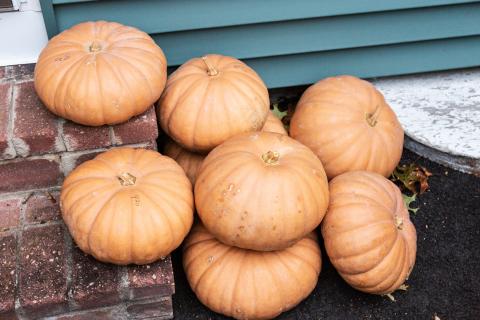
Long Island Cheese Pumpkins
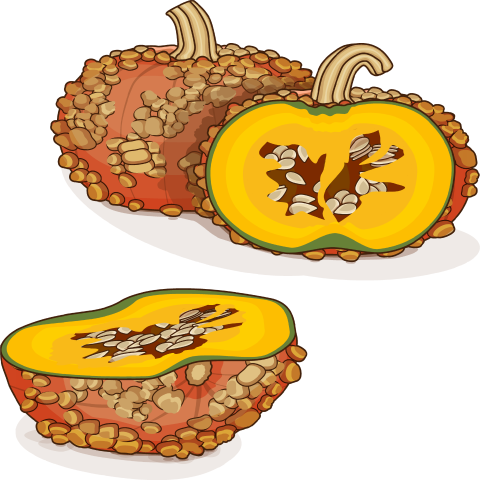
French Peanut Pumpkins
UNH Cooperative Extension: https://extension.unh.edu/
Kendall Kunelius – kendall.kunelius@unh.edu
Rebecca Dube – rebecca.dube@unh.edu
Transcript:
Kendall Kunelius 00:09
Welcome to this episode of Shared Soil, a podcast dedicated to creating community, honoring challenges, and encouraging personal and professional growth for all people in agriculture. My name is Kendall Kunelius, and I'm a field specialist in the area of agricultural business management.
Rebecca Dube 00:25
And I'm Rebecca Dube, providing technology and administrative support to Extension.
Kendall Kunelius 00:30
And today we're talking about pumpkins. I'm just getting right into it, Rebecca. This is one of my very favorite topics.
Rebecca Dube 00:36
Well, sure, it's pumpkin time. There's so much to do this time of year, and pumpkins are a wonderful aspect of it.
Kendall Kunelius 00:42
Yeah. So okay, I'm gonna ask you because I know that you like baking. Do you have any preferred recipes? Do you have any seasonal recipes that you're pulling out of the box?
Rebecca Dube 00:52
Well, I've got to say not for myself, but my daughter has an excellent pumpkin bread with a little bit of chocolate chips in them to make it a little more exciting, and that's always a great fall bake.
Kendall Kunelius 01:02
Yeah, I have to tell you, you know, I'm not really as big into baking, but I love decorating with pumpkins. Growing up on a farm, we used to grow our own pumpkins. I can't tell you what variety. I mean, this was years ago, but there's just something really magical about all the different shapes and sizes they come in. And I have to tell you, the same- I like ugly pumpkins for the same reason that I like the ugly chickens, like the naked neck chickens and all the unique feather colors and all that kind of stuff. I love those unique pumpkins, like the French peanut pumpkin that has all the textured outsides on it, or like all the different squashes that have all the different colors and sizes, like the red warty things and the lunch lady gourds, that kind of stuff. I love that.
Rebecca Dube 01:41
Oh, definitely. I love going to Milford's Pumpkin Festival and seeing all the different events, whether it's in Goffstown or Milford; and driving past a pumpkin patch in the fall is just so amazing, to just see that gold. I know pumpkins are orange, but that pot of gold sitting out there in the field.
Kendall Kunelius 02:01
Yeah, totally. So the good news is we have somebody here with us today that's going to help us understand a little bit more about pumpkins, past just maybe their edible value or their decorative value. So Chris, thank you so much for joining us. We'd love to have you give us a quick introduction to yourself and maybe just a little bit about your work with UNH.
Chris Hernandez 02:20
Sure, and I'm happy to be here. Always down to talk pumpkins. So my name is Chris Hernandez. I'm a professor in the Department of Agriculture, Nutrition, and Food Systems here at UNH, and I also run the UNH Cucurbit breeding program. So I'm a geneticist and breeder by training. It's basically my job to develop new varieties for the seed catalogs of pumpkins and squash and melons as well, so that's kind of what I do here.
Rebecca Dube 02:44
Wow, that's really interesting. Hey, can you tell me what does the term cucurbit mean, and what does it have to do with pumpkins?
Chris Hernandez 02:51
Yeah, it's a common question. So cucurbit is basically just like a nickname or shorthand for a much longer name of the family that squash, gourds, and other vining crops like cucumbers, melons belong to. Oh, so the family is cucurbitaceae, the cucurbitaceae family. So instead of saying that mouthful, we just say cucurbits.
Kendall Kunelius 03:10
Wow. Okay, wait. So I want to just go back for a second. So you're talking about you're a plant breeder by trade, and you're developing new varieties. So if I'm looking in seed catalogs, and I'm looking at pumpkin seeds. That's you. You did those pumpkin varieties, or you're like the mastermind behind those.
Chris Hernandez 03:30
Yeah. So I would say- So first of all, the UNH program is a really old program. It's been operating in some capacity since like the 1960s, working on cucurbit crops, so the short answer is yes. A lot of the varieties, especially in pumpkins, do have their parentage or trace back to UNH work that was done at UNH. But a lot of that work was done by my predecessor, Dr. Brent Law, who ran the program before me, and I've sort of taken over the program. So it takes about five to 10 years to develop a new variety, and so basically, what I'm doing is building on the work of the people who came before me. So in maybe five years, you'll see some varieties that are from my work directly. So that's kind of the longer answer. But yeah, a lot of varieties that you'll see in seed catalogs, especially in pumpkins, I would say a lot of those hybrid varieties do have some parentage from UNH, so the the program has historically had a pretty big impact in ornamental pumpkins, especially.
Kendall Kunelius 04:28
How cool is that? What what a cool stamp to put on the industry. So that actually is a good a good opportunity to get into this big meaty question of are pumpkins still grown in New Hampshire as a crop?If UNH is working on these things, and like you're saying, it's taking five to 10 years to really develop that. How does that impact the industry here? And do we still see those pumpkin crops, maybe like we used to when the program started?
Chris Hernandez 04:54
Yeah, I feel like especially if we're talking, you know, or we talk a little bit about what a pumpkin versus squash is. But if we're talking like ornamental pumpkins, I think there's definitely been trending up. You know, if you look at the statistics from the USDA for our state, which again, like the way that they bin things into pumpkins or squash is can be a little bit misleading. But basically, around half of the farms in New Hampshire are growing pumpkins.
Kendall Kunelius 05:18
Oh, no kidding!
Chris Hernandez 05:20
Various you know, acreage, right? It might not be a lot of pumpkins, but about half of them are growing pumpkins in some capacity because they're very popular, especially in the autumn for agritourism. You stick some pumpkins out there, that's going to draw people in to your farm operation.
Kendall Kunelius 05:35
It would draw me in in a second.
Rebecca Dube 05:38
Those pots of gold.
Chris Hernandez 05:40
So, so yeah, it's pretty common crop in the state of New Hampshire and New England in general.
Kendall Kunelius 05:45
Yeah, so I mean, our family farm is in Connecticut, and I have to say, like I had mentioned, we don't grow our pumpkins anymore. We purchase them from a farm that we've been very friendly with for generations, and it seems to be the type of crop that some varieties are like hit and miss in terms of what's trending for that year, like what colors and shapes, but it also seems like there's some disease concerns and drought impacts pumpkins in some way. What are some of the considerations that farmers have? Well, maybe the better question is like, what are they up against when they're growing these pumpkins, both ornamental and edible varieties?
Chris Hernandez 06:20
Yeah, I would say it's, it seems to me like - you know, I grew pumpkins a lot as a kid and stuff, and I kind of consider it to be an easier crop. But over the years, I feel like it's becoming more and more difficult to have a good crop of pumpkins. Pumpkins are- there's a ton of diseases and insect pests that impact pumpkin production in this region, and specifically, I'm seeing more and more problems with soil-borne diseases. So there's a lot of diseases. Phytophthora is one that you may hear about. It's caused by a pathogen that lives in the soil and can live in the soil for 10 years without any other crop in that soil, without any host. And so we're seeing more and more of these soil-borne diseases. This one in particular moves through if you have like a flash flood or other events like that that are moving soil. Or you're moving your equipment from fields, it's very common to get that pathogen into your fields. And so I'm seeing a lot more of that, which makes it really complicated. If you can't rotate or have enough land to rotate your pumpkin crop, it's very hard to deal with those soil-borne diseases. It can be very expensive if you're trying to rely on sprays. So that's I think that's becoming increasingly problematic, and something that for the breeding program, I'm focusing a lot more on trying to address some of these diseases so that we can we can manage them. Just picking the right variety and not have to rely as much on chemical control or being able to rotate a lot. So you know, it used to be people would say, "Oh, powdery mildew, which is a fungal pathogen, that's the biggest problem with pumpkins," and that's super easy to manage. We have a lot of resistant varieties, we have a lot of effective fungicides, but now we're seeing more and more pathogens that are much harder to manage. So that's it's getting a little bit more difficult, I would say.
Rebecca Dube 07:59
New challenges.
Chris Hernandez 08:00
Yeah.
Kendall Kunelius 08:00
Yeah, yeah. That's really interesting. And then, just quickly talking about the weather, what's the ideal climate for pumpkins?
Chris Hernandez 08:07
Yeah, so they they are frost tender annuals, so they like to be 70s, 80s. You know, soil temperature in the 70s is usually when you'd want to direct seed them. They like kind of 80s. That's kind of 70, upper 70s, 80s is where they're going to thrive. The issue is if you overshoot that and start getting into the 90s and higher, especially when they're developing their fruit, that can be problematic. So high temperatures will cause the fruit not to set, so you won't get- You might have good-looking plants, but they won't develop fruit on them, which is obviously problematic because that's what you're selling, right? The fruit, so that's becoming a problem. These high temperatures, you also have less pollinator activity, and then again, the plants are stressed. They're not going to be setting fruit as well, and so that can really reduce yields. It also reduces marketable fruit because let's say you have an extra large pumpkin variety, you know, fat check or something, right? It might be able to get 30-40, pounds in good weather, but if you have hot temperatures, you might get it like 20 pounds or less. So you're going to really reduce the fruit size as well. hat's another big problem: is you're going to have your marketable fruit sizes that you're planning on. You might not achieve that. Again, that's increasingly becoming a problem. So it's something in the breeding program. I'm starting to pay attention to stuff that does better at warmer temperatures and more consistently produces fruit of the size that it's supposed to.
Kendall Kunelius 09:28
Interesting, interesting. One of my favorite memories as a kid is carving pumpkins, right? And like, I loved the gross thing, and I always used to love cutting the top off and getting my hand in there and pulling out all those squishy guts and the seeds and everything. It would kind of stand to reason in my brain, llike, that's a lot of moisture that has to go into that, and yet the outside of that pumpkin's so waxy, and at the same time the plant is so big. So I would also think that moisture control or just having the right amount of moisture along with the temperature seems important. But I'm open to being corrected on that.
Chris Hernandez 10:00
Yeah, and they certainly, they do need a good bit of water, so it's very common. At least the way we grow it here, you know. We have them in black plastic rows with drip irrigation, so we can get water into them. But there are people who grow pumpkins in areas where they don't have a ton of irrigation, and so it's possible. You usually need some kind of emergency source. You can give them some water, and we're also assuming that you're not having a drought year, And so again, that's becoming- we're having more and more drought years, right? It's more difficult to have these, to produce pumpkins without having some form of irrigation, right? But they can do okay if they get regular watering with natural water for rain events and a little bit during key periods when they're setting fruit and stuff.
Rebecca Dube 10:42
All right, well then, Chris, tell us a little bit about the rogue pumpkin plants that people sometimes find growing in their compost piles or maybe the fallow areas in their yards. Why do some of those fruits come out not looking exactly like what was maybe intentionally planted the season before?
Chris Hernandez 10:59
Yep, that's very common. People always tell me about their compost fruit, plants that grow out of the compost. So pumpkins are pollinated by bees, and if you grow- so I should say also that pumpkins and zucchini are the same species. So they're they're genetically fully compatible.
Rebecca Dube 11:18
Oh,
Chris Hernandez 11:19
They just look different because they've been bred or developed for different use cases, right? So zucchini is something that's been bred to eat immature fruit at a very, you know, so a young stage of the fruit, whereas a pumpkin is something that's been bred to look nice and to be used at a mature stage, right? But they're the same species, so they're fully cross compatible. So a bee can go to your zucchini plant, if you're growing zucchini by your pumpkin patch, and pollinate your pumpkin plant, and so the fruit will look totally like what it should, right? Because the fruit is totally from the plant's genetics, but the seeds within the fruit are going to result from a parentage of that plant and the zucchini plant. So the seeds themselves are going to have 50% zucchini genetics, right? So when you plant them the next season. You're going to have some kind of zucchini pumpkin monstrosity, or maybe you'll think it's beautiful! Like you know, there's something for everyone. Maybe people like pumpkin zucchini. And something that- I don't know if you've ever left a zucchini on the plant for very long or like left it on too long, you'll notice that it starts to- it can start to resemble a pumpkin, right? Like it'll get very big. It might start turning orange, and so that's another hint that they're kind of, they're the same species, right?
Rebecca Dube 12:28
I remember the stem definitely looks the same between the pumpkin and the zucchini.
Chris Hernandez 12:32
Yep, they have a similar stem, and so yeah, what you're seeing is basically you had some cross pollination. Maybe your neighbor had a zucchini pollinated or something else, or another pumpkin variety, or you were growing a hybrid. So the seed from it are going to be different than the actual hybrid, and so that's usually what you're seeing. But yeah, you could save seed from that compost pumpkin and just keep picking the ones you like and get something different from that as well.
Kendall Kunelius 12:56
That's so interesting. So I also follow along with our UNH Yard and Garden Info line, so that's where people can call in with their questions, or they can send us online submissions. And inevitably, every year we probably get about 40 to 50 pictures of people being like, "What is this in my compost pile?" Like this, like little, like you said, monstrosity. It's not really a monstrosity. I think they're kind of cool, but some of it's like green, and some of it's yellow and it looks like a half and half and it's just really interesting to know that. I had no idea they were the same species. One thing I would have seen as a giveaway is like how when a zucchini gets really big, it gets that like net-looking skin on it. Like they kind of stretch, and that to me reminds me a little bit of some pumpkins that are- they look a little overgrown or some species, but yeah, and so okay. Now my other question is, what's the difference between a pumpkin and a gourd? Because I also think about those bicolored gourds and different varieties of that, but they're not the same, or are they?
Chris Hernandez 13:55
Yeah. So just back on one minute here, I'm just gonna, and I'll say people argue with me on this, but in the U.S. you can say that basically all pumpkins and gourds and zucchini are squash.
Rebecca Dube 14:07
Okay,
Chris Hernandez 14:07
But not all squash are pumpkins, right? So, like, if you have your little diagram or whatever, like squash is the most broad general term, and then within squash, you have different types. So, you can have a pumpkin, which in the U.S. is basically defined as like an ornamental fruit.
Rebecca Dube 14:22
Okay.
Chris Hernandez 14:23
Some people try to eat them, which is a mistake. And then you have zucchini, which is a summer squash. So that's something that you eat at an immature stage. And then you have your winter squash, which is something that you eat at a mature stage. So like a butternut or acorn, right? So acorn is also the same species as pumpkin. An acorn squash is a winter squash. Zucchini is a summer squash, and pumpkin is an ornamental pumpkin. And then a gourd. Sometimes people-that's like a subclass of pumpkins or squash. That's basically a very hard lignified rind. So that's another. Also within the same species, so yeah, your gourds, most of your gourds, not the ones that have the white flowers like the bottle gourds and stuff. That's different genus and species. But your typical, bi-colored gourds or your lunch lady gourds, whatever you want to call them. Those acorn squash, zucchini, and most jack-o-lantern, any kind of jack-o-lantern pumpkin; those are all the same species.
Kendall Kunelius 15:22
I never knew that!
Chris Hernandez 15:23
Now, all of those like round stacking pumpkins that you might see, like umbrella, those are actually a different species, right? So that's Jucarita maxima, which we also call pumpkins, right? And those are your Hubbard squash, your buttercups, your giant pumpkins; those are a different species. But your jack-o-lanterns, those are those are the same as zucchini. So you have- it's a little confusing because you have these different terms based on how they look and what they're used for, and then you also have different species that can be called the same thing because they're used for similar things.
Rebecca Dube 15:54
Wow! Well, that's why we have you telling us all these differences. We wouldn't know. But it really makes sense what you're talking about the with the immature to the mature plant. Because of course acorn squash and butternut, they're so much harder, they're so much more difficult to cut through whereas a zucchini, an immature plant, is much easier and much softer. So that's really interesting. And what I also like about what you're saying is knowing that the giant pumpkin is a separate species. I didn't quite know that. So how does someone even get into giant pumpkin growing? Do they have to have special seeds then for that particular species?
Chris Hernandez 16:32
Yep, and it's not- So the species of giant pumpkin is Cucurbita maxima. That's the scientific name, but it encompasses your Hubbards, your red warty thing-that's a maxima,
Kendall Kunelius 16:42
I love those! Yeah.
Chris Hernandez 16:45
Boston gourd, right? They have a lot of use in this region. But anyway, so giant pumpkin is the same as those, same species. And you can tell because if you look at a zucchini or a jack-o'-lantern pumpkin- I'll use the term jack-o'-lantern pumpkin because that kind of signifies the one species. But if you look at the handle; it's pretty hard, right? If you look at the other species, so a Hubbard, or it's got like a spongy handle, or call it the peduncle, but it's got a spongy handle, and so that's how you can tell them apart. If it has a very spongy soft handle, it's Maxima probably. If it has a hard handle, it's the other species, Cucurbita pipo. And if it's a butternut, it's Cucuribita mochada. So let's talk about butternut right now. That's a third species, right? So we have three different species that we use and are sometimes called squash or pumpkin. But back to the giant pumpkin. So those are maxima, and it's not just any maxima. There was a farmer up in Canada, Nova Scotia, named Howard Dill. And he actually got some seeds from the World's Fair pumpkin from his dad and some other varieties, and he was crossing them and selecting them like a breed. He was breeding them to produce large fruit. And so after about 15 years of his efforts, he developed his own strain, which he called Dill's Atlantic Giant. And so that strain, Dill's Atlantic Giant- all modern giant pumpkins are derived from that strain, basically. But the world record right now is 2800 pounds for giant pumpkins.
Kendall Kunelius 18:10
Wow, that's just that's like mind blowingly huge. Like that's over a ton. That's a ton and a half!
Chris Hernandez 18:16
Yep. And I I think the 3000 pound barrier is gonna fall this year too, I hear there's a guy in Rhode Island. But anyway, the seeds that they're using are not coming from the Howard Dill that you would buy in the store. So if you go to the store and you buy a packet of Howard Dill seeds, those are kind of generic giant pumpkin seeds. You'll probably get maybe a 200 pound, 300 pound pumpkin if you really pamper it. But growers, as a community, there's like this huge subculture of giant pumpkin growers. They have been selectively breeding on top of that work. So they've been selecting and trading seeds and growing them and picking seeds from the biggest ones. And so, if you want to be able to grow a 2000 pound pumpkin, you need to get seeds from one of the growers because they have their own strains that they've been maintaining and breeding for 30 years as a community.
Kendall Kunelius 18:58
Wow!
Chris Hernandez 18:59
It's derived from that Howard Dill, but it's kind of a separate thing now because they've been selecting for so many years and isolating the best genetics. And so, if you really want to grow 1000 pounder, which is small these days, but let's say 2000 pounds, that's respectable at a weigh-off. You need to get seeds from the giant pumpkin growers.
Rebecca Dube 19:17
What you're getting from these giant pumpkins, is the benefit just bragging rights, or do they have any other use at that large size, other than maybe a boat? You can do a little pumpkin regatta. Yeah,
Chris Hernandez 19:27
Yeah, I've run a regatta before, so I mean- I actually got into genetics as a kid through growing giant pumpkins. That was how I got interested in the idea of plant breeding. But anyway, so basically boats, some people sculpt them, so you can like make like three-dimensional sculptures where different amounts of light are coming through based on the thickness.
Kendall Kunelius 19:48
Oh,
Chris Hernandez 19:48
It's also just kind of fun. It gives you something to do. So like this summer, there were some folks at a local retirement home here who reached out to me that they wanted to grow giant pumpkins. It gives them something to do. So we have a project this summer. And it's just fun, you know. You have to kind of pamper them. So you're kind of just like any other hobby where you have to pamper like a show animal, right? It's the same thing with the giant pumpkins, right? You have to really take care of them. You take them to get judged based on their appearance and their weight. And so I think it's that same reason show animals are appealing. It's the same reason we find giant pumpkins appealing in the plant world-it's like the gardener equivalent of the animal husbandry thing.
Rebecca Dube 20:25
Yeah, you could eventually put a face on it because it becomes like something you know, you've pampered it all these years.
Kendall Kunelius 20:31
Yeah, I've seen them kind of like take over social media. That's been an interesting thing I've seen this year. People are oh, you know, like they give them names and they characterize them, and it's just really interesting. It's just also interesting as a case study of citizen science. Yeah, just hearing you say this association of people just got together and traded seeds and worked in their own magical way to make these pumpkins. I don't know if you want to comment on that interest. Like you are a scientist, and yet we are seeing citizen science that ultimately results in the product they're going for. Yeah, just tell us a little bit about how that seems to work hand in hand.
Chris Hernandez 21:10
Yeah, that's something I really enjoy about that community. It's called the Giant Pumpkin Commonwealth. It's an international organization that all these growers are a part of. All the weigh-offs are sanctioned by them. I have to take their judging module, so I can judge the Deerfield weigh-off.
Kendall Kunelius 21:22
Oh yeah, that's a thing. That's like a cultural icon.
Chris Hernandez 21:26
It is an interesting community. Yeah, and actually, I've actually been doing it since- it is a citizen science project, basically, right? Because they're doing this community selection to produce these giant pumpkins, and so I've actually have a project with them that I've started, and we're going to be sequencing. We're going to be looking at the DNA from all these different pumpkins and trying to understand like how are they getting so big? What are the genetics behind it?
Kendall Kunelius 21:48
Wow!
Chris Hernandez 21:49
You know, because it is this great resource, because these growers have also saved. I mean, they have these seed basically vaults in their houses, where they save seeds from the 1980s. Some of them up until now, and so that's like a science resource. I'm like, okay, I'm a geneticist. I'm interested in how we're able to achieve the largest fruit on Earth. So let's look at the DNA of the seeds from the 1980s and compare that to modern giant pumpkins. Like, what have we done? What changes have we made through the selective process? And so that's a collaboration I have with them. We're just starting that actually.
Rebecca Dube 22:20
Yeah, interesting.
Chris Hernandez 22:22
I call it my one-ton genome project.
Kendall Kunelius 22:25
What a great! Okay, listen, everything is better with a snazzy name. That's a great name.
Chris Hernandez 22:31
Yeah, all of these human projects - they call it like they're 1000 genomes. I'm like, okay, I don't have 1000 genomes, but I have a large fruit. I call it the one-ton genome project. So, yep.
Kendall Kunelius 22:42
That's so cool. Okay, so one question I want to ask you: What's your favorite pumpkin? Like, what's your favorite species for any use or any variety, any reason?
Chris Hernandez 22:54
Oh, that's tough. I mean, it's like asking someone what's their favorite kid, you know, like, what's your favorite child? You know, you can't really answer it, right? They all have their strengths, and you love them just the way they are. It's the same kind of way with pumpkins. But I guess like a specific type. I think I do like your kind of classic beauty. So, like kind of your burnt orange. Well, I need well-defined ribbing too, like the the lines or the ribs on the pumpkin, some people like it smooth. I need, I like the well-defined, nice shoulders, big stem. So just your classic sort of jack-o-lantern type, I really like. I'm also pretty partial to some of those those Maxima pumpkins, so the round stackers, because those come in so many different colors and patterns. Which I'm very curious about it from a genetic standpoint, but can't really justify spending money getting into that. Yeah, so I like those as well. So I think like your traditional jack-o- lantern beauty and some of the stacking types, I really like. What I don't love, but is starting to grow on me, is the warded pumpkins. It's interesting. I know you said you like ugly pumpkins, so I
Kendall Kunelius 24:00
Oh, I love them!
Chris Hernandez 24:00
always say there's a pumpkin for everyone! But I was talking to an old breeder, someone who used to be a pumpkin breeder in the industry, and they were telling me the first thing they did was get rid of warts because no one wanted it. It was considered undesirable. They bred out the warts, they threw all that away, and then all of a sudden people want warts. So now we're going back and fishing out stuff that we thought was bad and crossbreeding it to get warts back because that's what people want.
Rebecca Dube 24:25
That's why you need those seeds from the 1980s!
Chris Hernandez 24:27
There you go. Yeah, and it's kind of like; I kind of think of it like a fashion industry, right? It's always changing what people want in ornamentals, especially in pumpkins. Like maybe this year, like yellow is in. You want to grow like awas, it's a yellow variety, or Mellow Yellow or white.
Rebecca Dube 24:41
Yeah, I've seen white.
Chris Hernandez 24:43
I've spent a lot of time trying to breed larger white pumpkins because people want that for weddings, or they just like that white color. So in some ways, it's kind of nice from a breeding perspective because I know that a lot of the stuff that I have will probably appeal to somebody, but it also makes it hard to focus sometimes. Like, all right, what am I trying to accomplish right now? I need to focus on something. So I've been focusing a lot on just different colors of all the different sizes, and then also some warted stuff. Even though I don't love warts. I call them my warted marshmallow collection. They're a bunch of really small fruit, just like packed with warts. And so that's something that I've been working on.
Rebecca Dube 25:21
Oh, you'll have to save one for Kendall.
Kendall Kunelius 25:25
Well, I'm just gonna show up at the greenhouse one day!
Chris Hernandez 25:30
If you want warted pumpkins, I'm happy to provide them. So that's some of my rejects.
Kendall Kunelius 25:36
My very favorite are the French peanut pumpkins.
Chris Hernandez 25:39
Okay,
Kendall Kunelius 25:39
And this is one of my questions for you, so we'll have to put a picture of these in the show notes. But they're like- the way I've seen them, they can range from a light blush pink to a little bit of a deeper, orangey kind of look. But they have all those little textured warts on the outside, and I had been told once-I don't know if this is true-that the thing that makes those warts so textured and rough is like a virus that feeds on the sugar in the pumpkin. And so I mean this is me just being like somebody told me this. It could be a tall tale, but the way that you tell if that's the sweetest pumpkin, like if you're gonna eat it, you look for the roughest texture, grossest looking one. Is there anything to that?
Chris Hernandez 26:20
So yeah, I think I know what you're referring to. So I should say too those- the peanut pumpkin -I forget what the French name is, but the peanut pumpkin is a Maxima pumpkin. And the thing about a lot of those flat stacking pumpkins is unlike a jack o' lantern, which you should not eat. Like don't eat jack o' laterns, they taste terrible. A lot of those pumpkins do have high sugar content. Some of them are actually pretty good to eat, and you usually carve them too, so you can kind of display and eat it. But anyway, I don't think it's a virus. There are some warts that are caused by pathogens on the fruit. But I think what's basically happening is you're having the rind rupture at certain points and then healing to form the peanuts, and that could be due to that sugar buildup. It kind of causes an osmotic gradient, right? And it can cause rupturing sometimes. That's the thought. You know, I don't know if there's really been any studies that have looked into that. I've noticed that it seems like fruit that had really high sugar content. So we measure brix. That's the proxy for sugar. That they sometimes have issues with cracking, like in butternuts, and so like anecdotally there might be something to that, but there's not a lot of actual studies that have really looked into that because I don't think it's seen as something that's really too important from a science perspective. But yeah, I think it it could very well be some sort of that gradient or that buildup of sugar can cause rupturing, and then that's what's healing to form those peanuts.
Kendall Kunelius 27:51
Interesting, yeah.
Chris Hernandez 27:52
And those fruits are just predispositioned to either; maybe they have some kind of issue with their rind that makes it easier to rupture, but it's definitely a genetic thing, right? They're predisposed to rupturing and forming those peanuts, so it's not just environmental. Like that variety is going to form peanuts. Other varieties might form them too, but not as reliably as the peanut pumpkin, which has been developed because people like that, right? And they selected for that.
Kendall Kunelius 28:17
Yeah, that and then like you're saying, the edible ones. I've heard the one is it the Long Island cheese? It looks like a wheel of Parmesan that I've heard is very delicious. If you bake it and cook it in the oven, it's more of a savory or it could go sweet, I guess. But I've heard really good things about it.
Chris Hernandez 28:35
Yeah, I think that's a good one. It actually is very similar to the type of squash that is used or pumpkin, but I would call it squash since you're eating it. But it's also ornamental, so you can see some of these definitions are a little difficult. But it's very closely related to what's actually used in your- in canning in the canning industry. Ah, so a can of canned pumpkin is not coming from anything that looks like a pumpkin, right? So it might have a picture of like a New England pie pumpkin on it, but that is not what's in that can. What's in that can is a winter squash that's more similar to that Long Island cheese. So the variety is actually called Dickinson. That's the most common, and it's like a large winter squash. Doesn't look anything like a pumpkin really, and that is what's used in like Libby's canned pumpkin and pretty much any canned pumpkin. It's either this Dickinson or some type of Hubbard in the South, and so if you're using canned pumpkin to make a pie, you cannot say you're making a pumpkin pie. You are making a squash pie.
Rebecca Dube 29:28
Interesting.
Chris Hernandez 29:31
I don't correct people at the Thanksgiving table because that would make me- people wouldn't like it. Anytime somebody's talking about pumpkin pie, I'm like mmm, I think that's a squash pie. I'm not gonna say anything. Not gonna say anything, but squash pie.
Kendall Kunelius 29:45
Although not so far adjacent from sweet potato pie, but I prefer pumpkin pie with a strong bias. I don't like the marshmallows on the. Yeah, I don't know. I'm like, is that a dessert? Is it like an? I don't know. I polarized on those sweet potato. Pumpkins are the good gig, but that's really interesting that you're saying like we call it pumpkin pie, but that terminology does seem to have a gray area. It's like if I had a stack of pumpkins on my front doorstep to look nice, and then I may sneak a little Long Island cheese out of the middle so I can make dinner that night. Does it like, the minute it crosses into my kitchen threshold, does it become a squash? I don't, I don't know. You know, it's like yeah, that's really interesting.
Chris Hernandez 30:27
It's definitely blurred there, and I actually have a trial this summer where because we're basically interested in promoting that you like can actually eat some of these. There's just a lot of waste, so we actually have a trial. Long Island cheese is in there, the peanut pumpkins in there. So we're growing some of these, they're maximas, like the round stacker types that look nice. Then we're gonna also be looking more closely at their eating quality with the idea that you get like a fruit bowl, right? You display on your front porch and you bring it in and you eat it, just like you would display your apples in a fruit bowl on the table and then you eat it, right? So it can have beauty and esthetics, and maybe you can also eat it, so you're not really wasting, not just going to compost pile, right? Because they're also kind of expensive. A lot of those like flat stacking ones are pretty, they're pretty pricey. They can be like 20-30 bucks, for a really nice big spec at a farm stand. And so if you could also process it and use it, like I think that would be a little bit more bang for your buck.
Kendall Kunelius 31:20
Absolutely, I love that idea. Yeah, like a salad bowl, but in the best kind of way, like a pumpkin bowl. Yeah, that's so cool. Is there any question that we didn't ask you that you would have wanted to answer about pumpkins? I mean, like you seem like a pumpkin guy.
Chris Hernandez 31:37
I guess some other interesting notes on pumpkins is that they they're actually native to the Americas, and one of the oldest, one of the oldest crops that we domesticated in the Americas too about 8,000 to 10,000 years ago. And the thing that I find even more interesting is that we think- so, another reason we call these crops cucurbits or cucurbitaceae family; a lot of them produce a bitter compound called cucurbitasin, right? So it's a super bitter compound. If you go out in the wild and find a wild gourd in Mexico, you cut it open and lick it. And I have licked, I have done this to myself. A wild gourd, I play like roulette. Some of them are bitter, some of them are not. So it's like a roulette game. You know, you're trying them and seeing which ones-
Kendall Kunelius 32:24
It's like the hot peppers. Yeah.
Chris Hernandez 32:26
Yeah, but they're incredibly bitter, and so we think that these these wild gourds were actually being consumed by megafauna, so like mammoths and stuff, were eating these and spreading them around in their dung, the seeds. And then we humans came in and killed all of them, mostly, decimated the population, and then we became the main way that the squash could be spread around, right? And so we wanted stuff that wasn't bitter. We think that initially we were eating the seeds because the seeds aren't bitter, and then we noticed that some had flesh that was palatable, and so over time that's how we developed pumpkins and squash that we're eating today. Is like we basically we killed off the megafauna that were initially fine with the bitterness. They became totally dependent on us, and we got rid of the bitterness because for us that was no good.
Rebecca Dube 33:14
Oh, that's interesting.
Chris Hernandez 33:16
Yeah, so it's kind of interesting, like domestic case. Interesting story, I think, and just the fact that these pumpkins are being consumed by megafauna-I don't know. Yeah, because they are the only ones that could eat them and not be poisoned by this bitter compound.
Kendall Kunelius 33:30
Yeah, that's so fascinating.
Chris Hernandez 33:33
And you'll notice if you do go into your ornamental gourds and - I wouldn't recommend this, but if you play roulette with them, some of them are super bitter because they were bred to look nice as gourds, and they're really hard. No one ever intended you to eat them,
Rebecca Dube 33:46
Right.
Chris Hernandez 33:46
And so you'll still find bitterness in that because the gourds are more related to some of the wild stuff out there. So don't go trying to eat gourds.
Kendall Kunelius 33:55
Well, it's kind of like corn, right? There's some ornamental varieties of corn, like the glass gem kind of stuff. I think of like the dried corn hanging on your front door or something like that, versus something like a a cow corn or a silver queen. You know, there's all kinds, but also something that I think is native, right? Came from that same sort of area.
Chris Hernandez 34:19
Yep.
Kendall Kunelius 34:20
Awesome. Okay, look, I am just like two seconds away from getting in my car, driving out, and getting me a pumpkin. I'm so excited. Maybe it's a pumpkin spice latte, maybe it's an actual pumpkin. Maybe one of each. I don't know. But I'm really grateful that you took your time to actually hang out with us today and share some great information about pumpkins. If people have other questions, how can they find out more information about the plant breeding program at UNH or the pumpkin breeding program?
Chris Hernandez 34:49
We have a website unhccupcurvids.org that has some information. You can always email me, reach out to me via that way. And also like a lot of our varieties, you know, from local seed companies, you know Johnny Selected Seeds, for example, will advertise our varieties in there. So if you're if you're interested in getting some of our varieties, just look at some of these seed companies. Usually in the description, they'll mention the UNH program, so you'll know that you're growing something from the program. But yeah, always happy to talk pumpkins. So folks want to reach out to me, happy to answer some questions about the program.
Rebecca Dube 35:23
Terrific. Well, then we encourage all of you to go out there and get yourself some pumpkins or squash or any derivative of that. We thank you all for being here. Thank you, Chris, and we'll be talking to you all again soon on the next episode of Shared Soil.
Kendall Kunelius 35:45
Shared Soil is a production of University of New Hampshire Cooperative Extension, an equal opportunity educator and employer. Views expressed on this podcast are not necessarily those of the university, its trustees, or its volunteers. Inclusion or exclusion of commercial products in this podcast does not imply endorsement. The University of New Hampshire, U.S. Department of Agriculture, and New Hampshire counties cooperate to provide extension programming in the Granite State. Learn more at extension.unh.edu.
Author(s)


