Waterhemp Found in New Hampshire
-
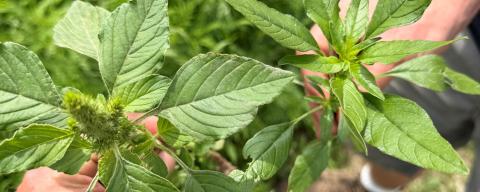
Waterhemp (R) resembles redroot pigweed (L), but has longer and slightly shiny leaves. Photo by Carl Majewski

Waterhemp (Amaranthus tuberculatus Moq.) is a weed that’s long been a pest in the Midwest. More recently it’s made its way into Pennsylvania and New York, and now it’s in New Hampshire; the weed has been identified on a farm in Merrimack County.
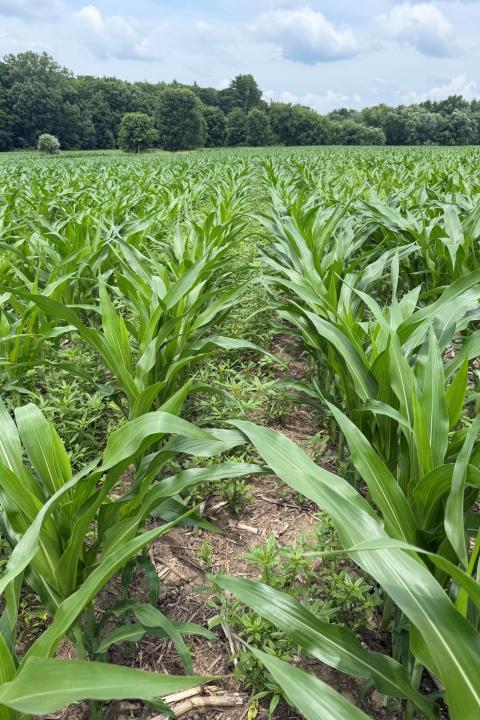
Figure 1: Waterhemp growing in corn in Merrimack County. Photo by Carl Majewski
Like any weed, it competes with crops and has the potential to reduce yields. However, waterhemp possesses several traits that make it especially troublesome. Like most members of the pigweed family, a single plant can produce tens of thousands of seeds that create a large seedbank in just a few years. Waterhemp is also more rapidly adaptable than other weed species. It’s dioecious, meaning that it produces separate male and female plants. That means that individual plants must cross-pollinate to reproduce, and that exchange of genes results in traits spreading within populations much more quickly than in weed species that self-pollinate. Particularly concerning is waterhemp’s ability to develop resistance to herbicides. Research shows that populations have become resistant to multiple modes of action and classes of herbicides, including triazines, ALS-inhibitors, and glyphosate; some populations are resistant to up to six different classes of chemistry.
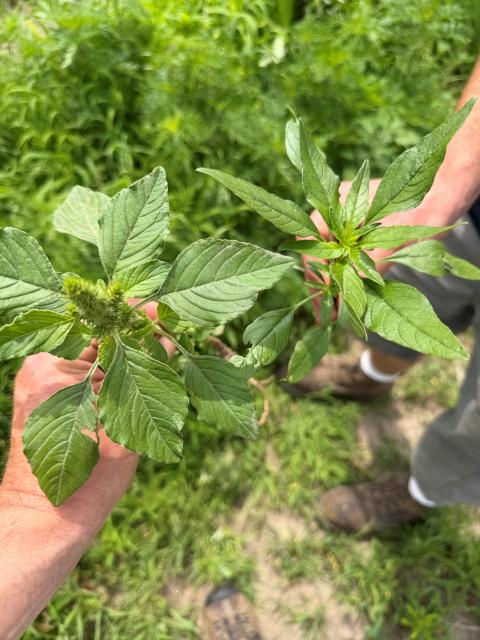
Figure 2: Waterhemp (R) resembles redroot pigweed (L), but has longer and slightly shiny leaves. Photo by Carl Majewski
Waterhemp can be challenging to manage, but it’s not invincible; follow best weed management practices in order to make the biggest impact. Start by scouting your fields early and often. Seedlings will be much easier to manage than more established plants, and small populations will be easier to manage than field- or farm-scale infestations. Become familiar with waterhemp’s identifying traits: while it resembles pigweed at a quick glance, waterhemp has elongated, shiny leaves, hairless stems, and longer, less compact flower stems. Cornell has excellent photos comparing several pigweed species for reference.
Use all the tools in the toolbox. An all-out approach to managing any weed should include mechanical, cultural, and chemical management practices. Waterhemp is an annual and its small seeds don’t germinate if they’re buried deep by tillage; cultivation easily disrupts small seedlings. Rotating to perennial forages, or establishing cover crops, similarly provides competition to new seedlings. Thoroughly clean equipment after working infested fields to prevent spreading seed. And while the weed is likely to be resistant to certain herbicides, there are still effective options out there; just remember to rotate herbicides with different modes of action to prevent further resistance from developing.
Extension is working to test populations for herbicide resistance so farms can put together effective spray programs. Let us know if you suspect waterhemp in your fields and give us a call if you have questions on how to manage it.
Extension Services & Tools That Help NH Farmers Grow

Newsletters: Choose from our many newsletters for production agriculture
Receive Pest Text Alerts - Text UNHIPM to (866) 645-7010
Author(s)


