Fall is For Spotting Plants Out of Place
This is a great time to go hunting for invasive plants, as well as other uninvited guests or aggressive intentional plantings in your garden. As the growing season winds down and plants start to show off their fall finery, we can notice things harder to spot when all is lush and green. As you can see below, an unwanted spirea is quite visible amongst the now pale ferns, fading asters and still-green brambles once its foliage shifts into the red. While not on the invasive list for NH, I noticed this ornamental shrub’s capacity to seed freely and come up everywhere so I removed the parent plant years ago but must remain vigilant for new seedlings which still emerge annually and get their legs under themselves quickly.
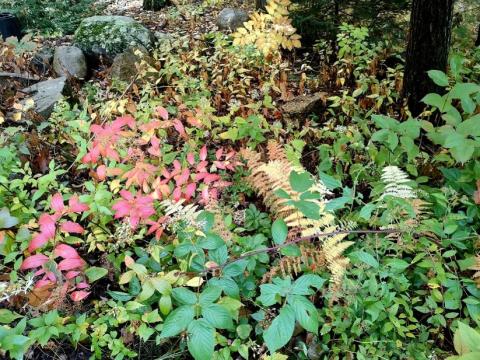
Unwanted Spirea
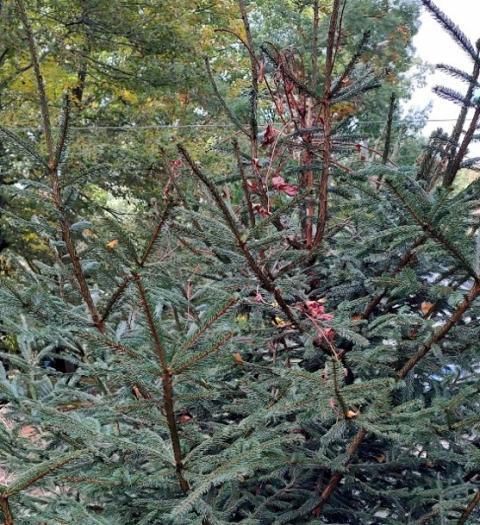
Vines climbing to treetops.
Woodland understory changes to fall shades, & I can see at a distance plants I didn’t see in summer. Unwanted Spirea (top) and vines climbing to treetops (bottom). Photo credit – jo Russavage
It’s a great time of year to edit your plant collections as the color pallet changes with the season. It’s also prime time for spotting invasives. Several of their competitive advantages over native plants work to our advantage in finding and managing them this time of year.
One advantage is that their foliage changes color seasonally too, so while their green foliage blends into the tree canopy during the growing season, invasives start to become noticed as their leaves begin to shift. Below you can see bittersweet at several stages growing in hedgerows at the NH State Forest Nursery. On the left, you can see stem damage from vines that blended in all season. At enter, leaf margins starting to yellow as fruits are developing, but hard to discern until you’re up close harvesting the fruits and berries of the plants intentionally being grown. As the fall progresses, the differences become more visible from a distance, as variations in the fall color of the natives are different and the bright yellow-green of bittersweet pops, shown right.
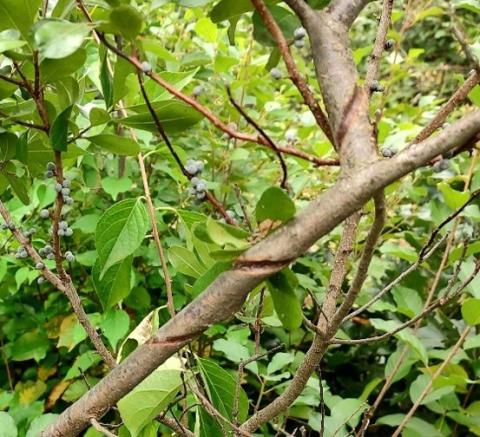
Bittersweet in NH State Forest Nursery Hedgerows September 1
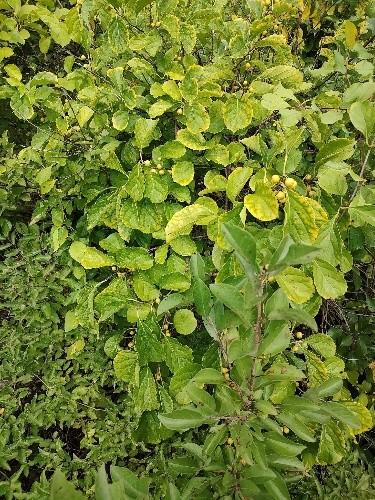
Bittersweet in NH State Forest Nursery Hedgerows September 2
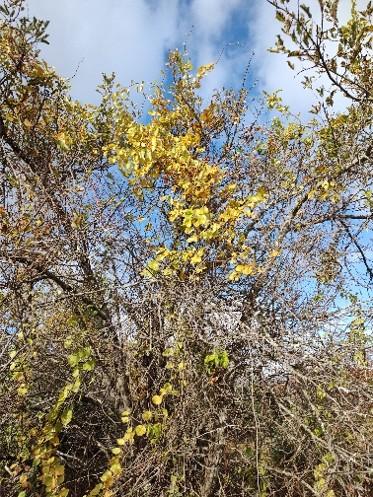
Bittersweet in NH State Forest Nursery Hedgerows on October 3
Photo credit – jo Russavage
By the end of the season, you’ll also notice shaggy canopies that don’t look like native tree forms, but are trees subsumed by massive intertwining of bittersweet vines. These vines may be too much to tackle now but disconnecting them at knee height can keep all that energy from going back to the roots, and help with management next season.
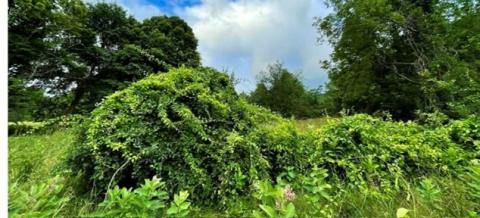
Bittersweet overing an apple tree, now dead but serving as a trellis. Photo credit - Donald Wilson
Often introduced species hold their foliage long after natives have dropped their leaves, as well as leafing out earlier in the Spring, so we have opportunities to spot them at both the beginning and the end of the growing season. Invasives like buckthorn (top) and honeysuckle (bottom) stay green later, and so are more visible as natives change to more vibrant hues.
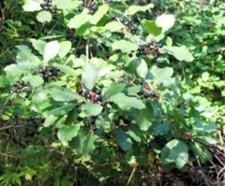
Buckthorn
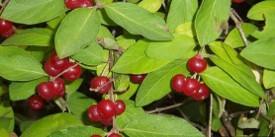
Honeysuckle
Photo credits UNH Cooperative Extension Invasive in the Spotlight features
Invasives are also ripening their often-showy fruits and berries, so they are easier to spot. Autum Olive, privets, and buckthorns are among those whose fruits are hard to miss.
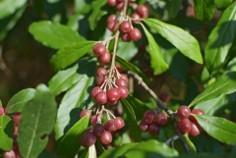
Autumn olive fruits
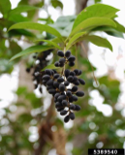
Privet berries
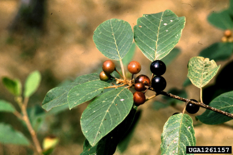
Buckthorn berries
Autumn Olive fruits make great jelly. Privet & buckthorn are for wildlife, not humans. Photo credits UNH Cooperative Extension Invasives in the Spotlight feature (1) Nancy Loewenstein, Auburn University, Bugwood.org (2) Gil Wojciech, Polish Forest Research Institute, Bugwood.org (3)
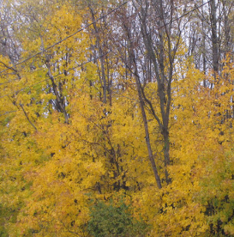
Norway Maple
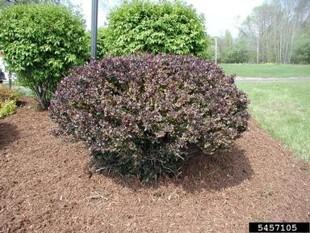
Japanese Barberry
Norway Maple (1) and Japanese Barberry (2) have distinctive fall color. Photo Credits: NH Guide to Upland Invasive Species (1) and Leslie J. Mehrhoff, University of Connecticut, Bugwood.org (2 )
Last but not least, invasives can hold their foliage long after natives have dropped all of their leaves, so they will be very visible in the understory or mid-canopy in affected forests.
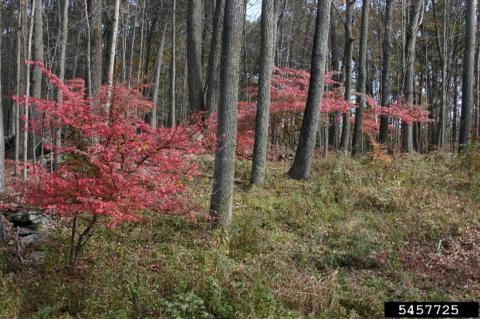
Burning Bush
Invasive Burning Bush still holding its bright red foliage long after other plants have lost their foliage. Photo credit – Iowa State Cooperative Extension
Author(s)


