Young Farmers in New Hampshire

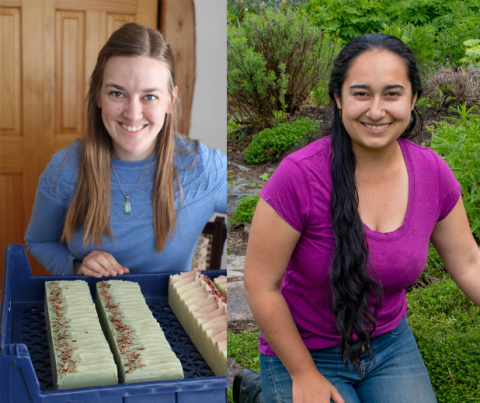
Kendall and Rebecca discuss the experiences of young farmers in New Hampshire with Lindsay Matras, who runs a small dairy and sugaring business, and Gracie Phillips, who manages an organic orchard and educational center. Both farmers share their challenges and successes, highlighting the importance of family influence, the need for diversification, and the impact of technology and community support.
Show notes:
Lindsay Matras – thesudsycow@gmail.com
The Sudsy Cow – www.thesudsycow.com
Matras Maple Sugarhouse & Dairy – www.matrasmaple.com
Gracie Phillips – heartsongfarmwellness@gmail.com
Heartsong Farm and Lost Nation Orchard – www.heartsongfarmlostnationarchard.com
‘The Apple Guy’ – Michael Phillips - The Apple Grower: A Guide for the Organic Orchardist
NH Food and Agriculture Strategic Plan - https://www.nhfoodalliance.org/new-hampshire-food-agriculture-strategic-plan
Natural Resources Conservation Service (NRCS) - https://www.nrcs.usda.gov/
UNH Cooperative Extension: www.extension.unh.edu
The Little Red Hen Farm & Market - https://www.littleredhenfarm.net/
Women in Ag Newsletter signup - https://unhoutreach.tfaforms.net/217751?CID=701G0000001AiKCIA0
Kendall Kunelius – kendall.kunelius@unh.edu
Rebecca Dube – rebecca.dube@unh.edu
Transcript:
Kendall Kunelius 0:00
Welcome to this episode of Shared Soil, a podcast dedicated to creating community, honoring challenges and encouraging personal and professional growth for all people in agriculture. My name is Kendall Kunelius, and I'm a field specialist in agricultural business management.
Rebecca Dube 0:23
And I'm Rebecca Dube, and I provide administrative and technology support to the specialists of UNH Extension.
Kendall Kunelius 0:30
So this episode, Rebecca, has kind of been in the works for, actually, not that long. Usually, we have our episodes planned well in advance. But the inspiration for this particular episode, which is all about what it's like to be a young farmer in New Hampshire, actually came from a networking event that we attended in the North Country back in the fall. And in that time I reconnected, actually, with some classmates from high school, and I was really interested to find out that one of them, Gracie, is farming still today. And then I was thinking about all the connections that I've been making with our local community where I now live in New Hampshire, and we actually have some young farmers down here. And I was also excited to invite Lindsay on the podcast as well. So today's theme of what it's like to be a young farmer in New Hampshire is going to be more of a conversational topic than our typical Extension education-type topic, but I think it's a really important episode for many of the young farmers in New Hampshire to hear that there's probably more similarities and more of those challenges than maybe they think so. Without further ado, Lindsay, I'll have you introduce yourself first, and then Gracie, feel free to jump in right after her.
Lindsay Matras 1:37
Sure. I'm Lindsay Matras and I live in Pittsfield, New Hampshire with my husband and my daughter. I am a soap maker. I make cow's milk soap. My business name is called the Sudsy Cow, and my husband does work a full time job, but a heavy "on-the-side" we do farming, on the side in quotes here, right? We do some heavy farming on the side. We have a couple of operations we run. We have a small-sized dairy operation and a, depending on who you talk to, a small or medium-sized sugaring business, maple sugaring business that's called Matras Maple Sugar House and Dairy. For the dairy end of things, my husband and I milk about five cows in rotation, and we supply our raw milk to about 30 customers right now that pick up weekly from us out of our sugar house. Our sugar house is kind of like a farm stand that's open year round. And so our sugaring business, we have about it's going to be - this year we're growing a little bit, and so we're going to have about 2700 taps this year. And we made, we made about 800 gallons of syrup last year on 2000 taps, so we're looking forward to increasing that up this coming season. So we run that business with my husband and I and my husband's brother, Asa Matras. So we really enjoy all of those things that we do!
Rebecca Dube 3:04
Great, yeah. And Gracie?
Gracie Phillips 3:08
Yeah. My name is Gracie Phillips, and I manage Heartsong Farm and Lost Nation Orchard with my mother. And this was the farm that I grew up on, and then moved away and did some other things. And then the last couple years have come back and have been really focused on doing the farmwork with, of course, some obligatory part-time other jobs that I enjoy doing as well. But our main focus at the farm is that we are a working farm and organic orchard, and we're also an educational center. So part of the work that we do is my father was the Apple guy, and he passed away a couple years ago, but he wrote books and taught classes here on the farm and also all over the country and the world about organic orcharding. And so it was really important to us that we find a good plan for these really special heirloom apple trees that we have here, and so we're still managing the orchards. We sell and make some great apple products and sell fresh apples, but we also offer educational programs on holistic orcharding, and invite some really great expert orchardists here to teach on some different elements of that. We make sure that we are passing on my dad's holistic framework for working with trees and soil health, all things that can be applied to things beyond apples. And my mom and I also teach classes on herbal medicine, and have perennial herb gardens and beds, and love having people come to the farm to learn about herbs and do plant walks, but we also both teach off farm about that as well. So it sounds a little like you, Lindsay, in that we do a combination of a lot of things. We grow veggies to cook meals for our retreats. We sell the apples and take care of the apple trees, but also are trying to do, to work educating people about how to grow their own trees and take care of them in a good way, and really cool things about heirloom apples, which I feel like has so much of the history of New England just kind of wrapped up in it. And, yeah, that's what our focus is here at the farm.
Rebecca Dube 5:15
Oh, that's great. This really echoes what we say throughout this podcast, in that there's so many angles you can use with a farm, so many different things you can do. And it's so exciting for us to hear different people doing all that and all the great ideas that they have.
Kendall Kunelius 5:29
Yeah, and one thing that I love that you both mentioned in your intros was the idea of family. One thing that we do a lot with here in terms of like a program and a demographic, is new farmers for Extension. But I want to make a little bit of a distinction here, and say a new farmer is technically- new and beginning farmer- is defined as anyone who's been farming for 10 years or less. But you know, age demographic doesn't apply to that. We've seen so many folks who, during those covid years, came to New Hampshire and started farming as a second career. Right? They retired from big business, or those city, that busy city life, and they're like, Okay, I'm ready to get out of that and move into something else. But many of those folks were older, and I think an interesting and important point to bring up is that although you are both young farmers, you actually have been farming, I'm going to take a guess and say more than 10 years, probably your whole life. Because Lindsay, I know you came from a dairy farm, right? So I just think it's really important to note that just because we have young farmers doesn't mean they're inexperienced or beginner farmers. You're both well seasoned in your crafts and in your enterprises. So the first question I'm going to ask you, which may be a little silly to ask now, but it's, did you get into farming because it's a family business, or because it's what you really wanted to do with your life? And it's a toss up. Whoever wants to take it, go for it.
Lindsay Matras 6:48
Sure. I'll start. I will say it's a little bit of both for me. So yes, I grew up on a small dairy farm; a small family farm that was a commercial dairy farm, and I I just loved it. It was the best childhood. I loved living on a farm. I loved the cows. I loved making forts in the hay and running around in the woods. And yeah, it just was a great atmosphere. Like my parents were busy and working hard, but they were always around, and I could always grab somebody if I needed somebody, and we worked together as a family. And I really, really enjoyed that we worked hard, but we also would work really hard, and then, like, go do something fun. So I really, really enjoyed growing up that way. And my husband grew up on like, what would be considered now a homestead. And so he had a similar background as well, and he actually worked for my parents for a long time as well. So we both really loved that way of life, and we wanted that for ourselves and our family, our children that we raised. So that's definitely what we are trying to emulate and replicate over here in Pittsfield with our cows.
Rebecca Dube 8:00
Wonderful.
Gracie Phillips 8:03
Kind of a similar answer for me, a little bit of both. I love this piece of land and this farm and our trees and my good friend perennial herbs that have been here a long, long time. So I've definitely always been very connected to this land. And even when I wasn't primarily living here on the farm, I would still come back in the summers and help with classes and gardening and help deal with apples in the fall and everything like that. But the last couple years has presented an opportunity. Since my dad passed away, we realized like, Okay, this is the moment. Maybe it wasn't exactly when I was envisioning I would take over the farm, but like this is the moment when things are going to shift with this space. And so it's been definitely overwhelming a lot, but a really exciting opportunity to be able to step in. And I feel like I'm still in the process of reimagining exactly what the path is for the farm going forward, but I think all of the goals that my parents had when they found this beautiful piece of land, to manage it and steward the land well, to take care of this really beautiful piece of land that we have in New Hampshire, which we have such beautiful land here, it's a really amazing thing. When people are able to use it and do good things with it and preserve it for all of us going forward. And to realize that I want to have it be a community space as well, and a place where people can come and they can connect with nature. They can connect with each other, they can meet other people doing really good work. Just hearing what you're doing Lindsay is really exciting to just hear like, what are the different things people are doing? How are they working with plants and apples and so I think that was really my goal in taking it over, was to be able to continue some of the really amazing work that my family has done, and then to also kind of be developing a plan going forward of how can this farm and orchard space evolve and continue meeting the needs for me and my family, but also for my community that I'm in? And what? What do people need? What can we be providing that we can share?
Rebecca Dube 10:12
Right. Well, what are, then, some of the biggest challenges that you face in being a young farmer, especially where Gracie, you had to suddenly take over, maybe at the time you weren't quite planning on doing that; and did any of those challenges shift once you got into it, once you started farming and was doing that as well?
Gracie Phillips 10:32
I feel like in some ways, I was lucky, because I did grow up helping my family on the farm, and this property has gone through a lot of different iterations of what the focus is on. When I was younger, we did market gardening, and we sold a lot at farmers markets and to restaurants. We still have some good friends that have excellent restaurants that we go and check in on, even though we don't sell to them directly anymore. We sold medicinal herbs by the pound and dried and sold medicinal herbs. And both my parents, my mom was a school teacher, and my dad is a writer and educator. And so it kind of naturally made sense that at a certain point they both realized that they wanted the education to be a piece of how the farm functioned. So I think that that is something that I've heard a lot of farmer friends say that they started out planning on only doing market gardening or only selling medicinal herbs, and then realized that to make this work, you often need kind of a combination of things to make that happen. But that, I actually think that's kind of an exciting thing to realize a little bit earlier, that I'm not going to focus on maybe one tract. We're a relatively small farm. We don't have huge amounts of acreage to keep adding more and more apple trees, for example. But what I do want to do is focus on the really special, unique heirloom apples that we have - teach people about what makes these apples special. Why should we keep weird old varieties around? Things like that. And so I think that is a big challenge is just kind of figuring out which pieces fit together really well. Is something that I already love doing and that people in my community need? And so I think figuring out that kind of puzzle of what all makes a particular piece of property work, because it's also individual, is a big challenge, but something that I'm grateful. I feel like I have a little bit of a head start on, that I watched my parents already kind of going through that process, and so I was ready to step in and know that, like, Okay, I'm in the process. What's the next phase going to be?
Rebecca Dube 12:39
Lindsay, did you continue with your parents farm, or did you start a brand new farm when you and your husband started farming?
Kendall Kunelius 12:46
That's a good question.
Lindsay Matras 12:48
Yeah, so our farm is a brand new farm over - My folks farm is over in Chichester, and we're right next door in Pittsfield. We have started our own small micro-dairy over here, and yeah, I would say, as far as, like, a challenge, we're really restricted over here on our property, as far as land and our barn size. We're almost at the point where we're - that's like the limiting factor to our growth, any further growth that we are looking to do, which we would love to do someday. So I would say one of the biggest challenges around our area, in central New Hampshire; where it's still rural, but there's definitely that tug with development over here, pretty heavily. The cost of land is so - so priced, like, it's just so high, and it's very hard sometimes to compete with development and what a developer is able to afford versus a young farmer starting out. And so we are definitely, I would say that's becoming our new limiting factor right now to towards growth. And I would say another hurdle that we are facing is just the cost of buying equipment to start out, not only to start out, but to scale up. And we've done that, both in our maple business and our dairy business really slowly as we grow with our sugaring business. My husband and his brother started when they were 10 and five, and they've been slowly, like they just caught the bug. And when my husband was 20, they built the sugar house. And it's just been one of those things that just organically turned into a nice little monster, you know. So we had the luxury, I would say, of being able to scale up our equipment as we as we wanted to there. And as we grew slowly but steadily and with a dairy business, we're growing quite steadily as well. We started doing that, milking, in 2021 and, yeah, just looking to scale up and get better equipment so that we're more efficient with what we do, and that we make as good of a product as we can so that's what I would say.
Kendall Kunelius 15:03
Yeah, and that really excites me to hear both of what you have to say about the land piece. Extension was heavily involved and the New Hampshire Food Alliance took the lead on making the New Hampshire Ag strategic plan just kind of a process over the last year or so. And there were a lot of farmers involved in that process as well. But I was on the beginner farmer committee talking about that, and that is exactly like the biggest thing that people were saying, is just that access to land. And we talked about this in our timber episode as well with Andy fast, where just because you have 10 acres doesn't mean it's a usable 10 acres. I wave to your cows every day when I drive to campus Lindsay, that's the road I take and I but that is on, it's on a mountain, right? You're on a hill. And, yeah, Gracie, in the North Country, we know that, flat land is at a premium. It's a big challenge. So to think about how we have to economize in those ways, really is something that young farmers, I think, is a, I don't want to say a unique challenge; it's just a very present challenge here in New Hampshire. And really, I'll go ahead and say New England. But I love that you're talking about equipment stuff too, because that's the bulk of my programming. It's the big reason why I have this whole tractor and trailer set up. I drive around, teach people about equipment operation and purchasing and all this. But it is true. I mean, the breadth of equipment that's available out there is more than maybe previous generations, but that also means the cost is that much more too. So you know, I think all that to say, the other interesting challenge, benefit that I would be curious to pick your brains about, is growing up with technology, and how has that boom informed the way that you're farming now versus maybe the way that your parents or previous generations had been farming?
Lindsay Matras 16:48
Sure, I can start out with this one. Yeah, we're honestly not like super-techie, the Matras family. We're not the most techie people, but we definitely have found ourselves using technology more and more all the time. I mean, you can't help it in this day and age. I would say one of the biggest things we use right now in our sugar house, which is a farm stand that's a self serve farm stand open year round. We use Square and in this day and age, obviously, a lot of people use cards to pay for things, not as much cash anymore, and it's super handy for people to just pop in, get what they need, swipe their card and go on their merry way. So we really appreciate and take advantage of that. Another thing is, we would love to eventually install a camera in our barn to help with monitoring calvings. There's been many a night where my husband runs down in the middle of the night to the barn to check on somebody that we're anticipating calving at any moment. So that would just make that really handy. I know of a farm over in Loudon with windswept maples. They have a nice camera system in their lambing pen, and their lambing season overlaps with their maple sugaring season, and so they found that to be so helpful, it's just saved a lot of labor and sleepless nights over there too. And of course there's websites and social media to help get your name out there. I have a little blog over on my website, the sudsycow.com, and that's just a great way to share your story, and especially social media, just live updates every couple of days, just sharing what you're doing. I really enjoy doing that for both our maple sugaring and dairy operation and our soap business. And then one more quick thing I want to add to is the maple industry has been really impacted by advanced technology. It's really cool. There's so many different opportunities to tap into. Haha, no pun intended.
Kendall Kunelius 18:49
Oh, but that was a good one.
Lindsay Matras 18:52
Some really cool features that make your your business run really well. We have a steamway hood and a reverse osmosis machine, which help. The reverse osmosis can take up to half of the water out of the maple syrup, or the, I'm sorry, the sap, while you're making the maple syrup. And so we save, probably, I don't even want to put a number on it, at least 10 cords of whatever here, if not more, just by those two things that we use. You can also remote monitor your sugar bushes. You can install these systems that will monitor your tubing, the vacuum system on your tubing, in your sugar bushes. And those will tell you if you have a leak, where exactly it is. So you don't have to waste any time running through the woods like walking all the lines, so many acres of wood, walking the line looking for a leak when you got sap to haul and syrup to make. So, yeah, it's really, I really think that it's really cool all the technological advances in the maple industry in particular.
Gracie Phillips 19:57
I feel some similar things here on our farm. For a long time, my dad had what he called a Luddite credit card form that was just a piece of paper that somebody filled out if they didn't have a check on them, that they would send one later. So while that was really charming, we have also found that installing Square and being able to meet people where they're at when they come to buy something or come to the farm has been really helpful. It's kind of funny, but a piece of my farm work that I've been doing here is learning how to manage my website better and use some of the marketing tools that you mentioned. It is always an interesting balance, where I really like bringing people out into the garden and showing them some of my favorite medicinal herbs, or what's going on with the garlic, and just kind of giving little check ins for the farm, but trying to balance like, Okay, how much does that get the word out there about what we're doing versus when does that become what I'm doing? So we certainly haven't reached that side of it yet, but I'm trying to find a good middle ground there where I can really share what we're up to and have it be a useful educational piece for people, but also a good way to get the word out that we're doing classes. And then there certainly are farming technical developments that happen that might be useful to us at some point. But at this kind of scale level that we are, I think what we're really thinking about the most is just having good quality equipment, making sure our tractor is working well. We use, like, a 50 gallon, 100 gallon spray tank to put the organic sprays onto the apple trees, and just knowing that, okay, we need some key pieces of really good equipment. We need a better vehicle to move things around the farm. That's like the next thing for this year, and at some point, we have also discussed getting solar panels. We have a really beautiful yurt space where we have a lot of our classes. My mom teaches yoga. We also sometimes have other teachers come in. We have a little belly dancing class. One of my friends is a beautiful dancer. She's going to hopefully do a program there this summer. So if we could put some solar panels on that yurt and make it so that it doesn't need any propane or anything to run the heater, that would be a really cool thing. So there definitely are some things that are shifting where, when we first looked at it, the solar panels just seemed like we'd need so many of them, or it was totally out of reach to do it. So I think there are some good developments happening where you can get some of these tools on a little bit smaller scale while you're waiting to do that scale up. And yeah, I think even just being open to the possibility that there might be technologies that come out. That using spreadsheets and just like really basic things to keep track of our information, that's what's going to work for me and for us going forward. Whereas, if my dad kept meticulous garden journals, and they're beautiful, I still have them, but that's probably not what's going to be the most efficient thing for us, so that we can actually spend time with people and out with my herbs and doing the things that we want to do. So I think being, which is definitely something that I discuss with my mom, that's like, we don't want to learn new things sometimes; but that if there are tools and programs out there that people have already built that could really help small businesses to make things more efficient, to just be open to learning about them and implementing them and giving it a try.
Kendall Kunelius 23:25
As you're both talking, one thing that really comes to mind is: you know, so I taught both an ag business management class and an equipment and facilities management class for UNH COLSA, and both of the curriculums for those I revamped. But I made a lot of calls to a lot of farmers and a lot of people that I graduated college with, like, 10 years ago, at this point, 11 years ago. But I said, what did you come across during your time that was helpful? What do you think these new farmers coming from college are going to need to know now? And like you're saying Gracie, it's that ability to adapt and change and move forward. But Lindsay, your point about being efficient and using that technology to align with your business goals, which, you know, you can't take the numbers out of decision-making for your farm, right? The production really goes hand in hand with the business, and there's no way to separate that. Where I'm going with this is just to say the technology at one point in time, I think was just, it was, it felt not quite ready enough to really make a difference. And it was expensive, and it was return on investment, but I think we've made enough strides where inviting those changes do make sense, while it still honors the intent of your business. And we know that diversification is really important in today's market, like you're both saying. You have really niche market, Gracie, with the apples, but being able to market those things appropriately using very farm-based technologies is important. I also think being able to say, like Lindsay, what you're saying about the maple pulling out X amount of percent of the water before it even goes into the boiling process, that's a cool factoid. People want to know that, that's marketable, right? So I think alot, alot of that to say, boy, the content that you can get to and the education value from those technology changes in my brain enhances, that idea of that young farmer. It aligns with that ability to continue to grow in this career throughout your, I don't wanna say throughout your farm journey, but you know what I'm trying to say? It just gives you a little bit more of a launching pad.
Rebecca Dube 25:21
Yeah, and that working with community is always essential. I love what you said, Gracie, about how to strike that balance between marketing what you're doing and not have that marketing be what you're doing, right? So sometimes even have to reach out to other people in your community to say, hey, I need some help with this, because I'm busy working with the herbs. So can you help me with the marketing? And we just had another episode that we recorded that we talked to someone, and that's what they do. They're working with helping farmers to market their wares and what they're doing. Because it is tough to do it all, and to have to learn every technology when that's not really your specialty, is certainly a challenge. So working with people who enjoy that and that's their specialty certainly helps. But of course, you're always on a limited budget, so you need that community to make it happen.
Gracie Phillips 26:12
Definitely. No, I think collaboration here is a really good tool. It is definitely something that I see that there's actually a lot of really great potential here, as many young and also older farmers in the area are this interesting, diversified collection of things that they do and what they bring on their farm. I do think that there's a lot of potential there to have good networking between us all, and to make it so that different areas in New Hampshire are really exciting places to come to for all kinds of farm goodies, farm education, the chance to like see how SAP houses work, and just kind of sharing some networking and resources between little places that are all doing good work, I think, is a really exciting thing. And I hope to continue doing more of and, yeah, working with some specialists that can help do things that maybe is not your exact skill set is a very smart move as well.
Kendall Kunelius 27:10
Yeah, the other thing that comes to mind as a young farmer thing is: we actually have seen recently in New Hampshire, a lot of legislation come out that's favorable to some sectors of agriculture. You know, the homesteading laws have certainly changed there. There's been a lot of movement in terms of adapting the legislation to the current markets and needs and the desires of what farmers are wanting to produce. And I think, I don't know, we don't have to go super deep into this question, but I'd be kind of curious to see if you guys, do you keep up with it? Or do you kind of just, you know, it's there, but what you're already doing isn't really affected by it. I'd just be curious to get your insights and opinions on on that.
Gracie Phillips 27:51
I certainly do want to keep up with it. I think it's something that, as I'm figuring out what the right scale is for my farm, that it's becoming more and more important. At this point, a lot of the products or things that we offer are in a very small scale, and they're to supplement people coming for educational programs primarily. But as we shift into maybe offering more products (we make a really great cider syrup, which I think is like the maple syrup of the apple world personally), just trying to figure out, like, okay, so what is on a larger scale if I was going to sell this, not on my farm or not at a farmer's market? What are the steps that I need to be taking to make that doable? And so checking in to see how things are changing is important. I have found that some pieces of information that I need were different in 2022 than they are now, but I'm not entirely sure what they are now. So definitely places like UNH, kind of central resources that I can go to to figure out okay, so this year, I'm finally ready to start making the steps to be selling more of a product or putting my apples into different stores. What things do I need to know is really important, and I think will be a valuable piece of how I decide how to scale and when to scale. And at what point does it become cost-effective to have to get new tools or a new setup, or new kitchen space, or anything like that?
Lindsay Matras 29:23
Yeah, and I will say, I also wish I could keep up with the changes a little bit more than I am able to. But as far as just on a whole, I think that New Hampshire has really good common sense overall laws about food and food safety. I think that as far as the dairy industry goes, you can sell raw milk, whereas in a lot of states, you can't even sell any raw milk. And so I think that's really nice, that we have that freedom here in New Hampshire. And as far as inspections go, and selling even ice cream. I know Jill from the Little Red Hen here in Pittsfield, another farm stand here in town. She worked so hard years ago on making it legal to sell ice cream that's made from raw milk, and she was trying to sell her goat raw milk ice cream that's so much gentler on people's stomachs who have maybe intolerances. And so New Hampshire was able to adapt a lot to allow for raw milk ice cream. So I really appreciate the flexibility and just the more broad laws that New Hampshire has. And I've heard also, and I know that the folks on the inspection level are great to work with. I've only heard good things about those folks too. So yeah, I really appreciate that, and definitely be keeping an eye on any changes in the future.
Kendall Kunelius 30:50
Yeah, I think one thing I know, like you were saying Lindsay, the people who do the inspections. I have my flock state tested, and it's really cool to see how deeply the Department of Ag does care about the continuing - obviously, agriculture - but that the continuation, they really are there to support you and to make sure that your flock is healthy, all your milk is good quality, all that kind of stuff. I think it's one of the key partnerships that I as an Extension person would love to foster is, how do we really help our young? And I'm going to expand that to beginning and new farmers as well. Understand that really, these systems are here to support you, and Extension is no different. You know, we are education. We're strictly education. There's no regulatory anything that we have. We don't get involved in that process. But you know, for us, it's pretty important to hear from young farmers, and basically all farmers what you know, what could be helpful for us to help you on your farming journey. And that is one of the things we hear a lot, is like, the food safety - we have a really great food safety team - and folks are like, I want to do the right thing. I just need to know how to do it. Like you're saying, Gracie, it's like, this changed in 2022 and I think it changed again. But I just like, I'm not sure, where do I find that? And a lot of the younger farmers I talked to, things have changed since their family started farming, and then they kind of took things on. So maybe that goes back to our challenge question. It's another perceived challenge: how do we make sure that we're keeping up to date with all these things that just kind of evolve over time?
Rebecca Dube 32:16
Yeah, now for either of you, do you feel that your geographical location or your current community values influence your ability to have a viable farming operation. Does that have any influences on the type of things that you choose to offer?
Lindsay Matras 32:31
I think that down here in Pittsfield we are in a good location because it's rural enough for there to be lots of land available to farm, and there's a lot of owners of large tracts of land around here too, so you can still tap into a nice land base. But it's close enough to large populations and a large number of customers that want to support you. And a nice perk about that even is a lot of our customers are living in a rural area, and they kind of get farming, and they get the ups and downs of milking cows and making syrup. They understand the value of the product they're getting, and they would love to do it themselves, but they know how how much work goes into making those products. So I know for us anyways, a lot of our customers just tell us all the time how much they appreciate our products and the work that we put into it. And we just really value that, and we value those kinds of people. And I would say, on a broader scale, over the last like 10 years or so, we have seen a nice shift of people who want to support local. I think I remember working for NRCS, the Natural Resources Conservation Service, as an intern back in 2013 and there was a lot of articles and talk about support local farms and and it was kind of still not, not nearly what it is today. And there was just - business was trying to be drummed up for local farmers, and the importance of investing in your local community. And I think people really caught on, because these days small farm stands like the Little Red Hen and ours are thriving in our town, and that's two in one town. And you see new ones popping up all the time, and it's so wonderful. I think folks really appreciate not only the value of supporting local farmers, but they also know the food is so good, like, the food is better quality, it tastes so much better, and people know that it's more nutrient dense, and it's going to fuel your body better and give you better health for the long term. And I think it just really encourages me that people see the value in all of that, and I hope it continues. Yeah.
Gracie Phillips 34:48
Well, I definitely agree. I think the community and the people that come to support the farm really are at the heart of everything that we do here. And we are so grateful to the amazing people that are really invested and interested in supporting local agriculture, that see the value in what we do, and that we have really tasty teas and apples and products. But also that they're contributing to the fact that we're caring for this piece of land in a good way, and that that is something that they want for their state and their country, that they love. And so that feels really amazing. One of my favorite things is when people come to the farm and they're like, Oh, my husband's really into apples. I don't really care, but I'll be happy to sample a couple while I'm here. And then they find something, and they're like, I didn't know that fruit could be so different, like this. Or they eat a nice, wild greens pesto that I made from forage stuff in the yard. And they're like, Oh, I thought it would be such a big deal, and herbal food would taste bad. And it's like, no, this is reclaimed information that our previous generations had about how to eat dandelions. They're so good, and bitters are so helpful for you. And so seeing that process of people really connecting with what you have to offer, and knowing that they're going to incorporate it into their own lives, is a really special thing, and I love doing that. In my case, our farm is in Northumberland, New Hampshire, so a little bit further north than you Lindsay. And I think that is both one of the really special gifts of our property and one of the challenges. I certainly feel this way, and I know a lot of students and people have said this too. We have this long, windy driveway down a hill, and our farm is in this little valley. There's this beautiful Cape Horn mountain that kind of hugs our farm. And it really does feel like this little pocket of land, especially when you have people there all coming together to learn and share what they know. Where you're like, Oh, we're in this amazing little bubble where we can just be present and connect with each other and connect with the land. And so I think once people get here, the fact that they're really - There certainly are houses and neighbors and things not too far from us, but we do have the chance to really just be on the farm. And with the woods as our borders of the property, and that opens a lot of really amazing potential. We go on foraging walks and things in our woods. We feel totally comfortable having people sit outside and share about personal things. And it just it feels like a really safe space. However, we are pretty far away from a lot of the major cities or places that - even larger areas in New Hampshire - and so I think our focus really needs to be on having larger reasons for people to come, like they're going to come and get a little farm tour and buy a bunch of apples. But maybe if they live far away, we've had a lot of people that come and they get like, Okay, I want a bushel of apples when I come, and I help them write out little notes of all the different varieties they want and stuff about them. But it's not going to be those people that are going to come every week. Or we have a retreat weekend where people can stay on the farm, which is actually a really fun thing to do anyway. And I think knowing, like other things that are happening in my Northeast Kingdom area is another important thing, is that you can come up here, you can see my farm, but there's also some other really cool farm events going on. There's a farm event that has music down the road that you could stay the day after for, and making it more of a destination thing is an important piece for us. But then the other side of that is, is that our original and heart of our goal is that I want to be offering what people in my actual local community need and want. So I really am trying to find a good balance between making it so that people from farther away can come up and have this be a special time when they're able to just get away and really learn and take care of themselves and focus on things that they want to learn about. But then also, how do I make it so that people can pop over and pick up some teas and maybe have some shorter farm tour days and things like that? Where people that do live right around me can come - so that's kind of where we're at with that, is trying to find a good balance of realizing we are pretty tucked out of the way here. It's not going to be only the people that live in my immediate town around me that can make this work, but that if they're not invested, and we're not offering something that they need, then the models like not working.
Kendall Kunelius 39:21
Interesting. Okay, so I want to ask this question. I know it's a little off script, but I'm going to ask it if you could put a piece of advice on a t-shirt and give it to every single young farmer in New Hampshire. What would you put on that t-shirt?
Lindsay Matras 39:39
I think that I would write, Think Outside the Box, because you might need to pivot, and you might need to do something different than what you thought you always should do, and things aren't going to look always look exactly the way you picture. And problem solving - sometimes you have to get really creative when you're on a farm. So especially if you're dealing with live animals, you sometimes have to get very creative. Somebody gets out of the fence and they're running around the woods, and you got to figure out how to get them back in. And it's just you, yeah, sometimes you just have to figure it out. So think outside the box.
Kendall Kunelius 40:21
I would say, like, think outside the nest box, like a little chicken outside the box, like a little question overhead, like a little, yeah.
Lindsay Matras 40:28
That could be the little picture that goes with it!
Gracie Phillips 40:36
Ready to go. I would wear that shirt! I might have my shirt say Outrageous Diversity. That's a fun little key tenant that my dad would say when talking about how to have a healthy, diverse ecosystem and farm. And so I think it definitely applies to, don't have only mowed lawn grass, have a diversity of plants, but also have a diversity of things that you're doing on your farm; Like don't grow only one kind of thing, have a collection of them. And also just being open to having a diversity of ideas and viewpoints and people on your farm. That always lends strength and moves things forward. I can't think of any examples where having a larger diversity of information, plants and people is not a good thing. So I think that's what my farm shirt would say.
Kendall Kunelius 41:35
I love that.
Rebecca Dube 41:36
Kendall, I think we're gonna have to go into the t-shirt business.
Kendall Kunelius 41:41
I think Gracie, I would make that t-shirt, like an I Spy t-shirt. It would, you know, like, the I Spy text, the font. It would be like, Outrageous Diversity, and then have all kinds of everything on the shirt. That's like a little I Spy scene. How fun would that be? So fun? Yeah, Shared Soil, branded merch, coming soon.
Kendall Kunelius 42:05
Great. Well, what else? I mean, I feel we could certainly go on. But what else have we not asked that we should have asked?
Gracie Phillips 42:14
Yeah, I guess I would just say it's been really lovely to meet you. Lindsay, I will be looking up your farm soaps now, and to chat here. I think I really enjoyed talking about all these things. And yeah, I think that there's definitely some challenges that go into being a young or new farmer in New Hampshire, but that there's a lot of really exciting potential, a lot of people doing really good work. And I think especially with the introduction of social media and technology, is just like part of our life, there is a lot of amazing potential to make really good connections, both with places like the Extension that are like education sources and other farmers and people doing really good things. And that creating a network together of people doing good work on the land and also people interested in supporting that work is a really hopeful vision going forward. And that there can be a lot of models that are doable, that aren't just like, Okay, I need to scale up and up and up, then I also have a max capacity of how big my farm can be. And so how do I, how do I make that work? And yeah, I think it's a exciting time to be a young farmer in New Hampshire.
Lindsay Matras 43:30
Yeah, and something Gracie said sparked a thought for me, too. And yes, Gracie, I think my husband and I are going to have to go make a day trip up to see you sometime. We'll look forward to doing that. In some ways, it can be - I have been discouraged about the dairy industry in New Hampshire over the last 10 or so years. You see a lot of commercial dairy farms going out of business all the time. And if you do the numbers, it's really - like the number of commercial, working dairy farms in New Hampshire right now is, it's at an all time low.
Kendall Kunelius 44:05
Think it's like 64. I think Sarah, Sarah's our dairy state specialist. Last time I asked her, she said 64 but again, that may have changed, but right it is, is surprising, yeah.
Lindsay Matras 44:17
But the thing is, about the dairy industry is in New Hampshire, is it's not dead, it's not going anywhere. It's actually coming back in a different way. And this is plays into young farmers doing things differently. So I would say, if you were to look at, if you were to look at farming from a generational standpoint - That's a good way to look at how things change over the years. Each generation has to, whether you're taking over a new farm, or you're creating a new farm or taking over a previous farm, each generation has to do things a little bit differently. Just like Gracie is doing at her farm. She wants to honor her dad and his legacy, and all that he's invested in that farm. But she also knows that to do it in 2026 now you have to change a couple things. And she's also a different person, and has different strengths and gifts, and she's learning to do that in that way. And I would say that's how it is on each piece of property and each different type of farming industry. For dairy farms, in particular, commercial dairies have been the model for the last several decades, and it's been really successful. It's been a little harder the last several decades, and just increasingly so. And it's because it's just not as cost effective, and it doesn't make as much sense financially anymore because of various changes that are out of dairy farmers control. And it's easier to just ship your- milk a lot of cows, and ship your milk and not have to deal with customers. But in this day and age, you see a lot of new dairy farms coming up that are scaling down their cows. They have 10-20 cows. And I've heard of farm down even in Pennsylvania that's doing this. They milk about 10 cows, and they sell direct to the customer. And they're hugely successful down there. They have, they just opened a little ice cream shop where people can come in and sit and enjoy ice cream that's made from the cows. And so they're diversifying their products that they make with the milk, and they're selling direct to customer, which is really challenging when you're milking cows. But if you do it once a day, we're actually milking once a day right now. And you're trying to do a value-added product, more than just quantity. You can be really successful that way. And I see a lot of farms in New Hampshire pursuing that in the dairy industry. And it's really encouraging. So it's just another way to think outside the box. You can still farm in New Hampshire. It's not dead, it's not going anywhere. There's always room for farming in New Hampshire and yeah, I I look forward to seeing what other folks do and and more young farmers coming up behind us.
Kendall Kunelius 47:08
Well, they'll be wearing those really nifty t-shirts we just came up with, you know they will!
Rebecca Dube 47:12
Adding to the farm stands!
Kendall Kunelius 47:14
This is awesome. I just can't thank you guys enough for your time and your thoughts and your insights. I'm really excited for folks to hear your point of view and your perspective. And both your realism, the pragmatism that you're bringing, that realistic perspective, but also the encouragement and the good things too. I think it's pretty easy to have a perspective of what the what the state of Ag is in New Hampshire, but it's great to hear from some folks who are actually in it and living it. I think that's just so invaluable. And as always, for our listeners, we would love to hear ideas for the podcast. Lindsay, we haven't done a dairy episode yet. Maybe it's time. We did eggs!
Lindsay Matras 47:51
I'll hook you up with some people.
Kendall Kunelius 47:53
Yeah, Gracie, we did already do an apple episode. I missed the boat on that, but we haven't done herbs.
Kendall Kunelius 48:00
There's always herbs!
Kendall Kunelius 48:01
You're right, yeah.
Gracie Phillips 48:03
You tell me, I'd love to chat.
Kendall Kunelius 48:06
Totally.
Rebecca Dube 48:07
Well, it's been fantastic to speak with both of you, and it's so encouraging to see another generation of farmers developing, but also bringing farms into exciting new directions. So thank you very much for being a part of this, and we'll be talking to all of you again soon on the next episode of Shared Soil.
Kendall Kunelius 48:32
Shared Soil is a production of University of New Hampshire Cooperative Extension, an equal opportunity educator and employer. Views expressed on this podcast are not necessarily those of the university, its trustees or its volunteers. Inclusion or exclusion of commercial products in this podcast does not imply endorsement. The University of New Hampshire US Department of Agriculture and New Hampshire counties cooperate to provide extension programming in the Granite State. Learn more@extension.unh.edu.
Transcribed by https://otter.ai
Rebecca Dube 28:34
So if you want to explore more of the North Country, go ahead and check out www.northcountryfarm trail.com (we'll put the link to it in the show notes), and see what some of the farms have to offer. Thank you so much Kate for joining with us today, and we'll be talking with all of you soon on the next episode of Shared Soil.
Kendall Kunelius 29:39
Shared Soil is a production of University of New Hampshire Cooperative Extension, an equal opportunity educator and employer. Views expressed on this podcast are not necessarily those of the university, its trustees, or its volunteers. Inclusion or exclusion of commercial products in this podcast does not imply endorsement. The University of New Hampshire, US Department of Agriculture and New Hampshire counties cooperate to provide extension programming in the Granite State. Learn more at extension.unh.edu.
Transcribed by https://otter.ai
Author(s)


